
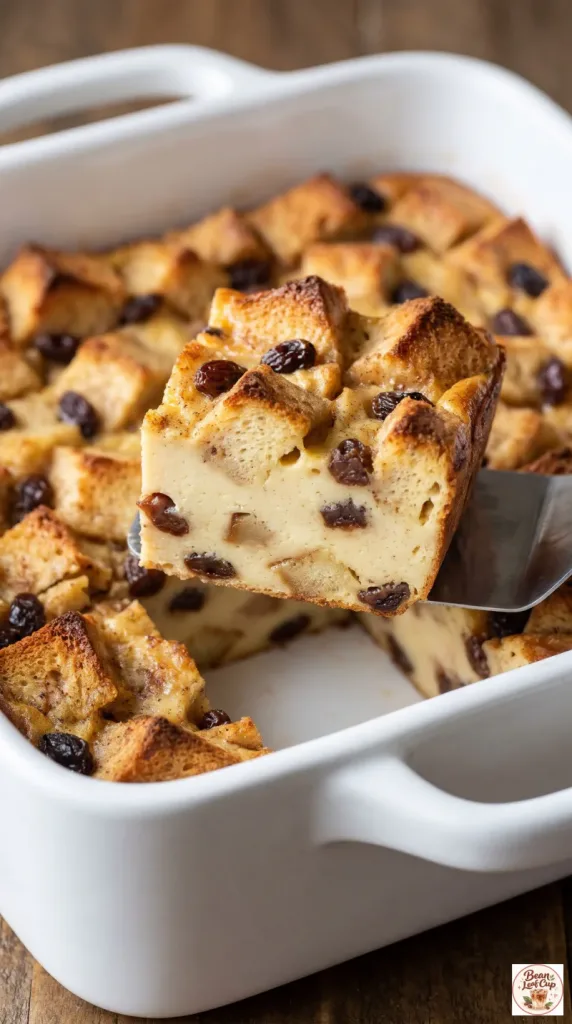
Eggnog Bread Pudding turns day-old bread into a soft, creamy holiday dessert. Cinnamon-raisin bread brings warm spice and little pockets of sweetness. The top bakes golden while the middle stays tender. A measured drizzle of maple syrup finishes each serving.
Why I Love This Recipe
This is a comforting way to use leftover eggnog without a long list of ingredients. The oven does most of the work, and the resting time makes the pudding easy to portion.
- Creamy center: Eggnog and eggs soak into the bread instead of leaving dry pockets.
- Toasty top: The raised bread edges brown while the inside stays soft.
- Simple prep: A bowl, a whisk and a baking dish handle the main work.
- Flexible timing: You can soak the bread ahead and bake it later.
What You’ll Need
- Servings: 8
- Prep Time: 15 minutes
- Soak Time: 30 minutes
- Cook Time: 45–55 minutes
- Rest Time: 15 minutes
- Total Time: 1 hour 55 minutes, using the longer baking time
- Oven Temperature: 350°F (175°C)
- Pan: 8-inch square ceramic baking dish, at least 2 inches deep
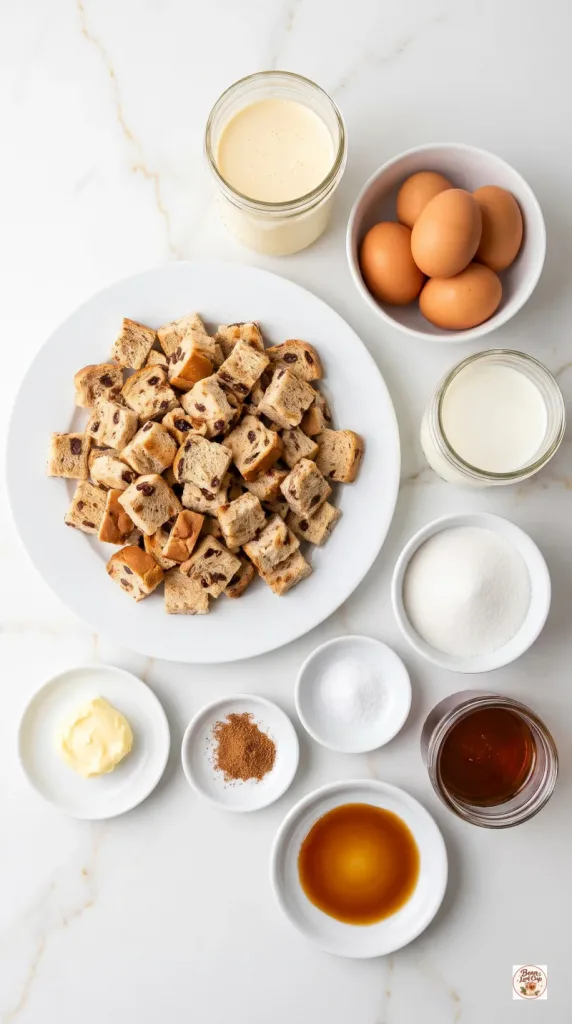
Ingredients:
- 1 tablespoon unsalted butter, softened, for greasing
- 300 g day-old cinnamon-raisin bread, cut into roughly 1-inch cubes, about 7 loosely filled cups
- 2 cups (480 ml) full-fat, nonalcoholic dairy eggnog
- 1/2 cup (120 ml) whole milk
- 3 large eggs
- 2 tablespoons granulated sugar
- 1 teaspoon vanilla extract
- 1/4 teaspoon ground nutmeg
- 1/4 teaspoon fine salt
- 1/2 cup (120 ml) pure maple syrup, for serving, 1 tablespoon per portion
Use pourable refrigerated eggnog, rather than a thick concentrate. The bread already contains raisins and cinnamon, so no extra raisins are needed.
Tools You Need
- 8-inch square ceramic baking dish with integrated side handles
- Large glass mixing bowl
- Whisk and flexible spatula
- Measuring cups and spoons
- Kitchen scale
- Instant-read thermometer
- Serving spatula
- Foil, if needed to protect the top
How to Make Eggnog Bread Pudding
Give the bread time to soak before baking so the center cooks evenly.
Step 1: Prepare the Bread and Dish
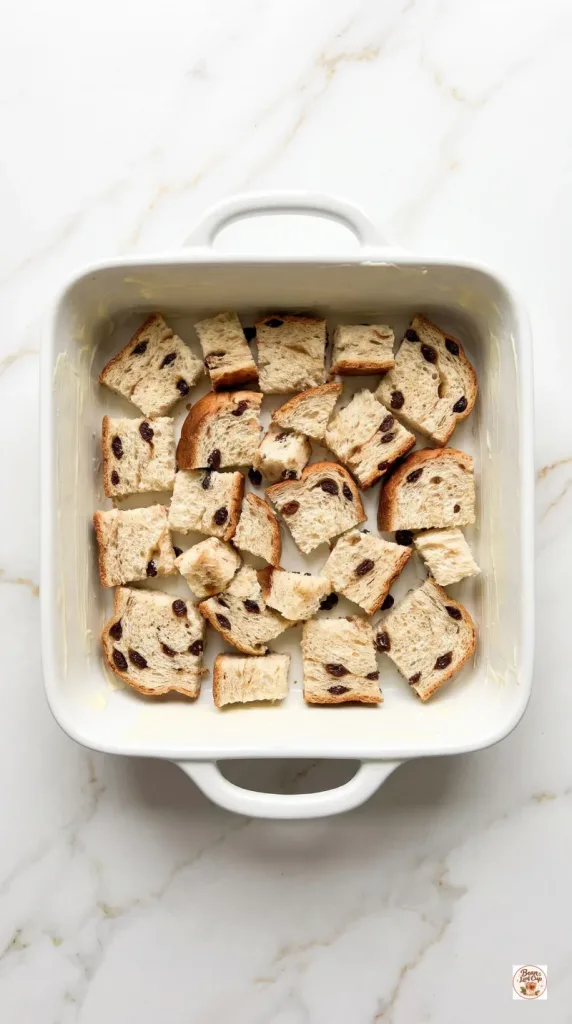
Grease the bottom and sides of an 8-inch square ceramic baking dish with 1 tablespoon softened unsalted butter. Leave the dish unlined.
Spread 300 g day-old cinnamon-raisin bread, cut into roughly 1-inch cubes, loosely in the dish. Keep the cubes irregular rather than pressing them flat.
Step 2: Whisk the Custard
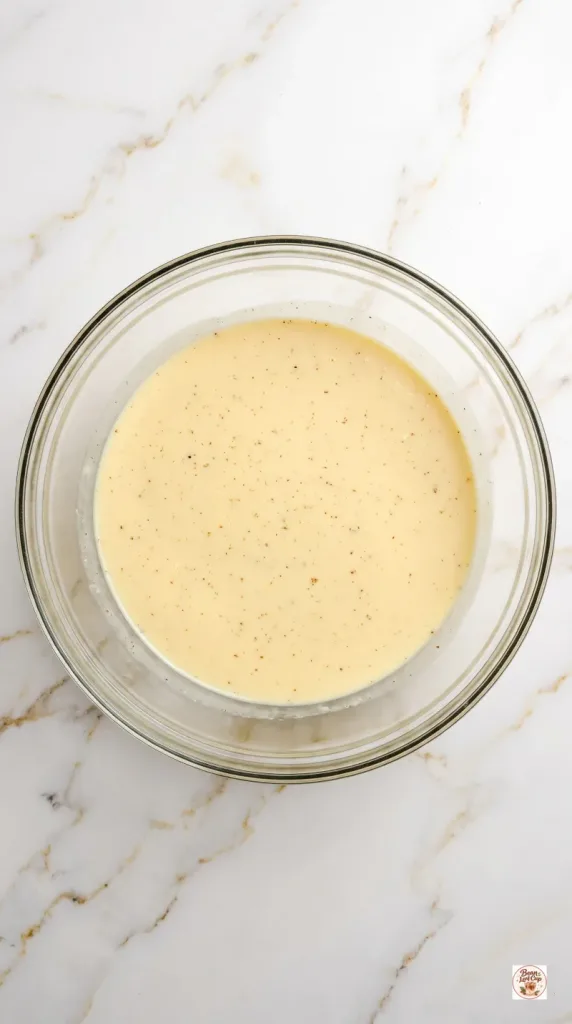
Whisk 3 large eggs with 2 tablespoons granulated sugar until smooth.
Whisk in 2 cups (480 ml) full-fat nonalcoholic dairy eggnog, 1/2 cup (120 ml) whole milk, 1 teaspoon vanilla extract, 1/4 teaspoon ground nutmeg and 1/4 teaspoon fine salt until evenly blended.
Step 3: Soak the Bread
Pour all the custard over the bread. Gently fold and press with a spatula so every cube gets wet, without crushing the bread into a paste.
Cover the dish and refrigerate for 30 minutes. The bread should look swollen and moist, with a little custard still visible between the cubes.
Near the end of soaking, preheat the oven to 350°F (175°C). Remove the dish from the refrigerator while the oven heats; follow the dish maker’s guidance on temperature changes.
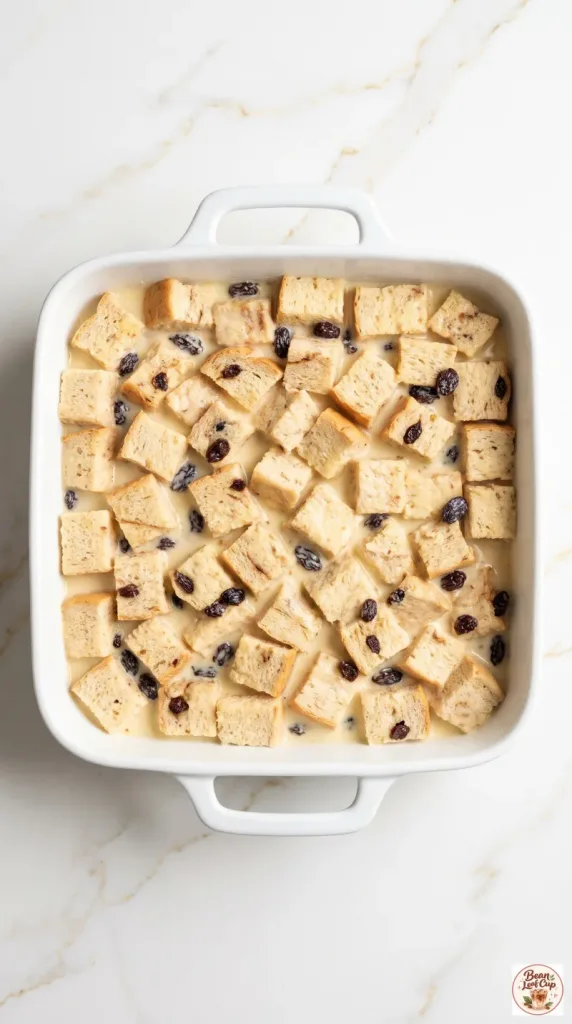
Step 4: Bake Until Set
Uncover the dish and bake on the middle rack for 45–55 minutes.
Check at 35 minutes. If the top is already deeply golden, loosely cover it with foil for the remaining baking time.
The pudding is ready when the edges are puffed, the center is set with a gentle wobble rather than a liquid slosh, and a thermometer in the center reads 160°F (71°C). Do not keep baking until the center becomes dry.
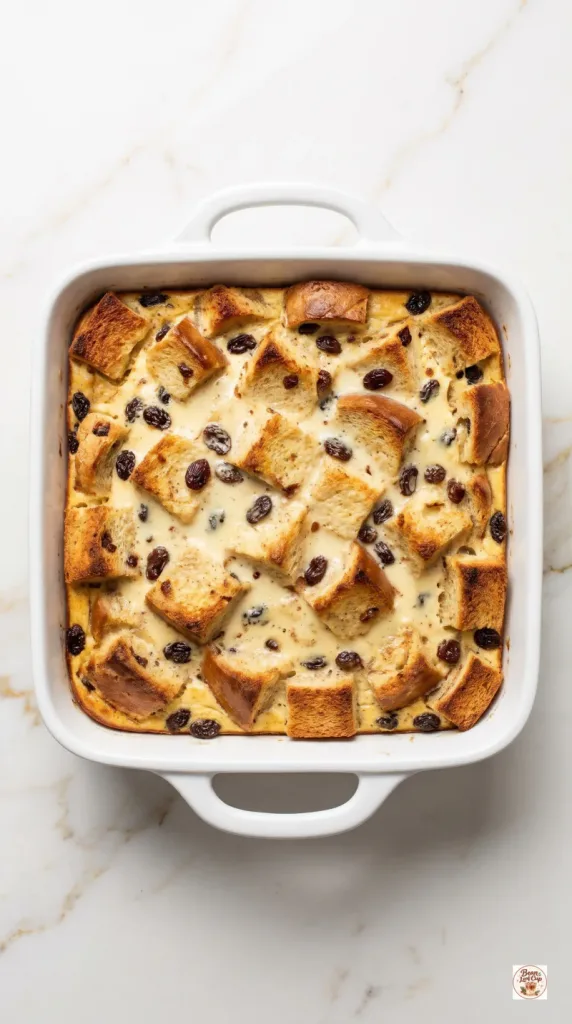
Step 5: Rest, Portion and Serve
Let the pudding rest for 15 minutes. It will settle slightly as it cools.
Cut into 8 portions and lift each serving onto its own plate. Serve warm rather than straight from the oven.
Drizzle each portion with 1 tablespoon pure maple syrup, using 1/2 cup (120 ml) total for all eight. Keep the remaining pudding plain in its baking dish until portioned.
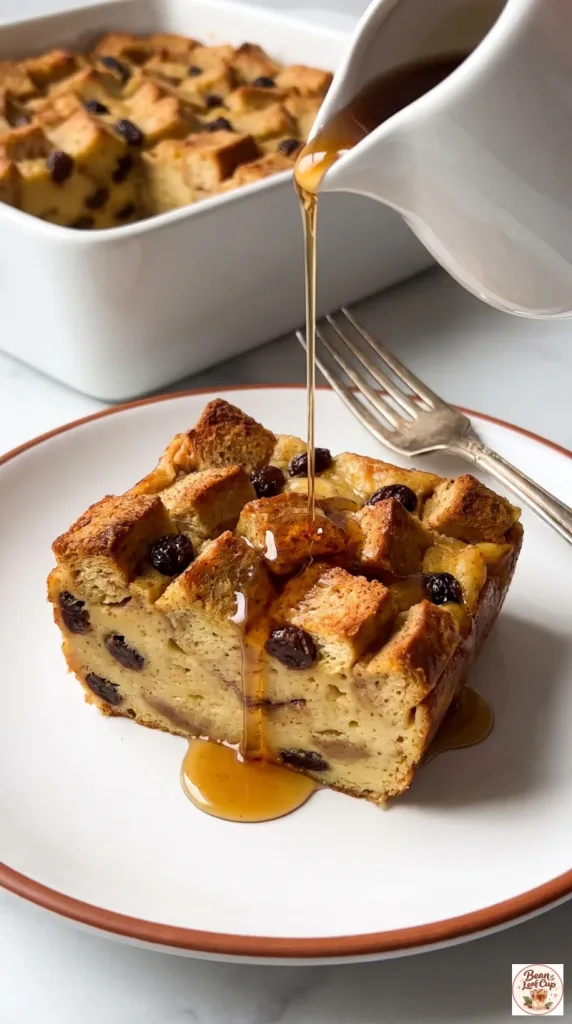
Why This Recipe Works (Quick Science)
Bread has lots of small spaces that soak up liquid. The resting time lets the eggnog mixture reach the center of the cubes, which helps prevent dry spots.
As the pudding bakes, egg proteins set around the soaked bread. Eggnog adds richness and sweetness, while the uncovered bread edges lose moisture and toast. A short rest lets the custard firm up enough to lift without making it stiff.
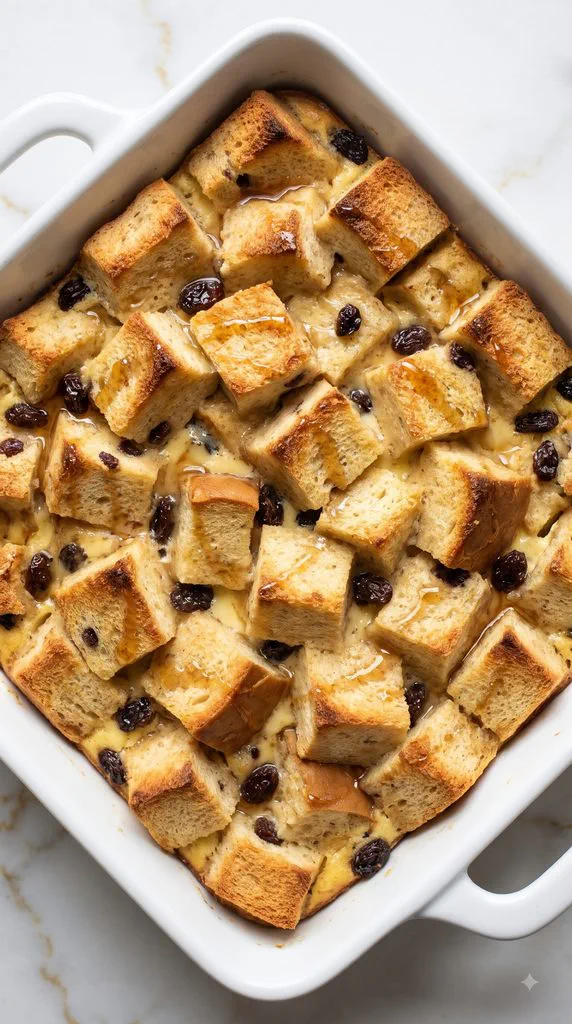
Common Mistakes to Avoid
- Using very fresh, soft bread: It can collapse during soaking. Day-old bread holds its shape better.
- Packing the cups tightly: Weigh the bread for a more reliable bread-to-custard balance.
- Skipping the soak: Dry centers can remain even when the top looks done.
- Baking until completely firm: The custard keeps setting as it rests. A slight wobble is fine; loose liquid is not.
- Adding syrup to the whole pan: Drizzle after plating so the top keeps more of its toasted texture.
Pro Tips
- If the bread is fresh, spread the cubes on a baking sheet and dry at 300°F (150°C) for 10–15 minutes, without deeply browning them. Cool before using. This adds time to the recipe.
- Choose eggnog you enjoy drinking. Its spice and sweetness carry into the pudding.
- Insert the thermometer into the center of the custard, away from the dish bottom.
Make-Ahead Tips
Assemble through the soaking step, cover, and refrigerate for up to 12 hours. Keep the maple syrup separate. Let the dish stand while the oven heats, following the dish maker’s instructions, then bake until set and 160°F (71°C) in the center. A chilled batch may need a little longer than the listed baking time.
Leftovers and Storage
Refrigerate leftovers in a covered container within 2 hours. Store for up to 3 days. Keep syrup separate when possible.
Reheat a portion in the microwave in 30-second bursts until it reaches 165°F (74°C) in the center. For a larger amount, cover an oven-safe dish and reheat at 325°F (165°C) until the center reaches that temperature.
Freeze cooled individual portions in airtight containers for up to 2 months. Thaw overnight in the refrigerator before reheating. The texture may be a little softer after freezing.
Macros Information
Estimated per serving, based on eight portions and including the maple syrup:
- Calories: 290
- Protein: 9 g
- Carbohydrates: 46 g
- Fat: 8 g
- Saturated Fat: 4 g
- Fiber: 2 g
- Sugar: 29 g
- Sodium: 290 mg
These are estimates. Bread and eggnog brands can change the totals.
Frequently Asked Questions (FAQ)
Q: Can I use plain bread?
A: Yes. Use the same 300 g weight of day-old brioche or sturdy white bread. The pudding will have less cinnamon flavor and no raisin pockets.
Q: Does the eggnog need to contain alcohol?
A: No. This recipe uses nonalcoholic dairy eggnog. Alcohol is not needed for the custard to set.
Q: Can I use low-fat eggnog?
A: It may work, but the pudding will taste less rich. Full-fat eggnog gives the most predictable creamy result here.
Q: Why is the middle still wet?
A: It may need more baking time, especially if the dish went into the oven chilled. Cover a browned top loosely with foil and check the center again.
Q: Should I squeeze the bread into the dish?
A: No. Press gently to wet it, but leave the cubes loose enough for the custard to reach the spaces between them.
Q: Can I make it the night before?
A: Yes. Cover the assembled pudding and refrigerate for up to 12 hours before baking. Add syrup only after serving.
Q: Can I leave out the maple syrup?
A: Yes. The bread and eggnog already provide sweetness. The nutrition estimate includes the listed syrup.
Q: Why did the pudding sink after baking?
A: A little settling is normal as the puffed custard cools. A collapsed, wet middle usually means it needed more time in the oven.
Final Thoughts
Eggnog Bread Pudding is a cozy dessert with a toasted top, a tender middle and plenty of holiday flavor. Give the bread a good soak, watch the center as it bakes, and let it rest before serving. Leave a comment with your favorite way to use leftover eggnog. Happy cooking!