
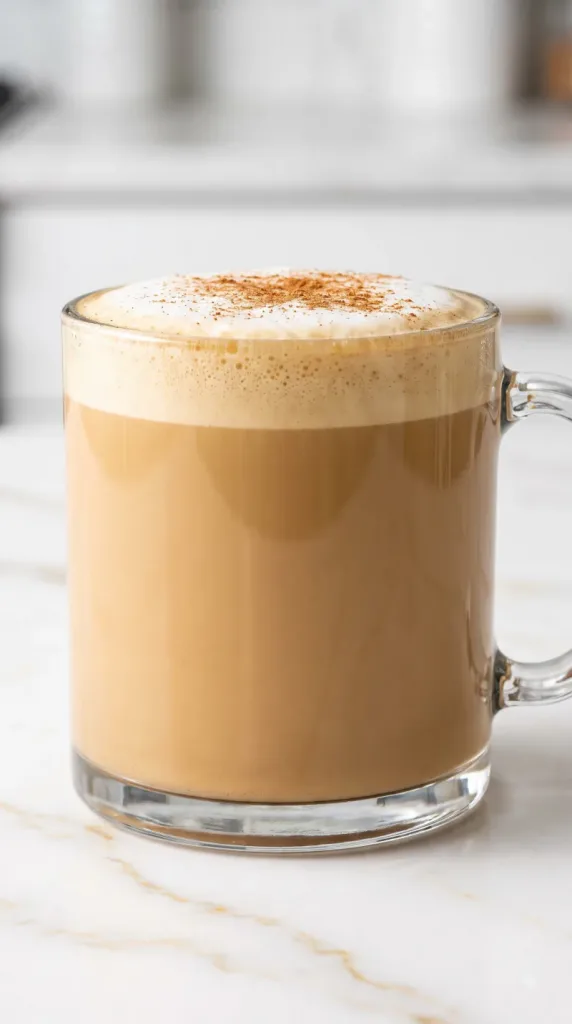
Hot Brown Butter Latte brings a toasty, nutty flavor to a creamy cup of coffee. A little butter turns golden in the pan, then blends with espresso and brown sugar. Warm milk softens the coffee, and a light cinnamon topping adds a cozy finish. You can make this rich café-style drink at home in about eight minutes.

Why I Love This Recipe
Brown butter gives this latte a deep flavor without a homemade syrup or a long ingredient list. The browned milk solids taste a little like toasted nuts, even though there are no nuts in the recipe. Brown sugar rounds out the espresso, while the milk keeps the drink smooth and mellow.
- Big flavor from a small step: Browning the butter adds a rich aroma in just a few minutes.
- Easy sweetness control: Start with the listed sugar, then adjust a future cup to suit your taste.
- Simple ingredients: Butter, milk, coffee, sugar, and cinnamon do all the work.
- A cozy finish: A thin cinnamon dusting complements the toasted butter without hiding the coffee.
What You’ll Need
- Servings: 1 latte
- Prep Time: 3 minutes
- Cook Time: 5 minutes
- Total Time: 8 minutes
- Mug: A heat-safe glass mug that holds about 12 fluid ounces, with room for a thin foam cap
Ingredients
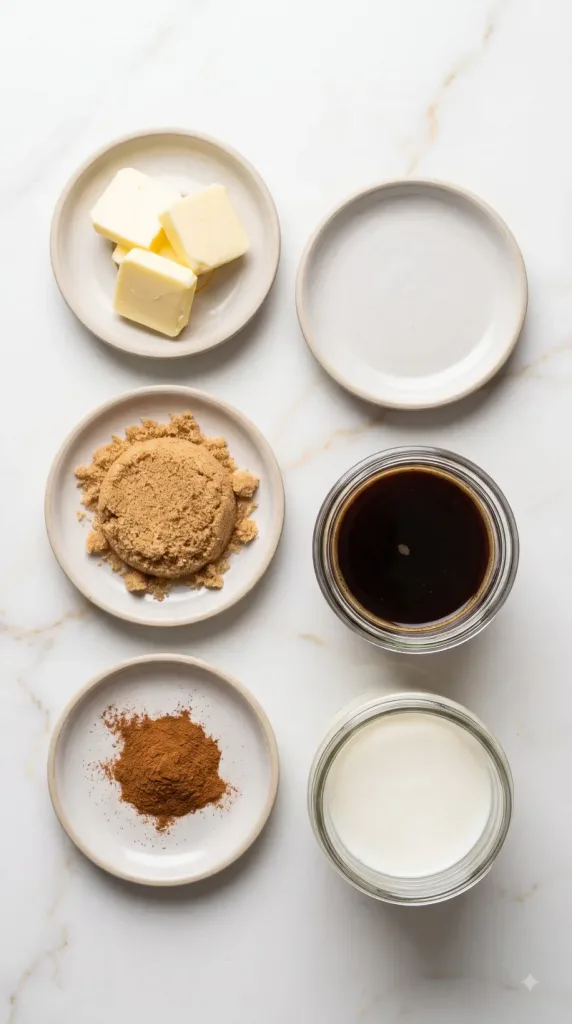
- 1 tablespoon unsalted butter
- 2 teaspoons packed light brown sugar
- 2 fluid ounces freshly brewed espresso
- 1 cup whole milk
- 1/16 teaspoon ground cinnamon, for the topping
Use regular butter rather than clarified butter or ghee. The milk solids are what brown and make the toasted flavor. Whole milk gives the fullest body and a soft foam cap.
Tools You Need
- Small, pale-interior saucepan so you can see the butter change color
- Silicone spatula
- Espresso machine or another way to brew concentrated coffee
- Handheld milk frother
- Microwave-safe glass jug with room for the milk to expand
- Measuring cup and measuring spoons
- Heat-safe glass mug
How to Make Hot Brown Butter Latte
Have the milk and sugar measured before you start. Brown butter can go from golden to burned quickly.
Step 1: Brown the Butter
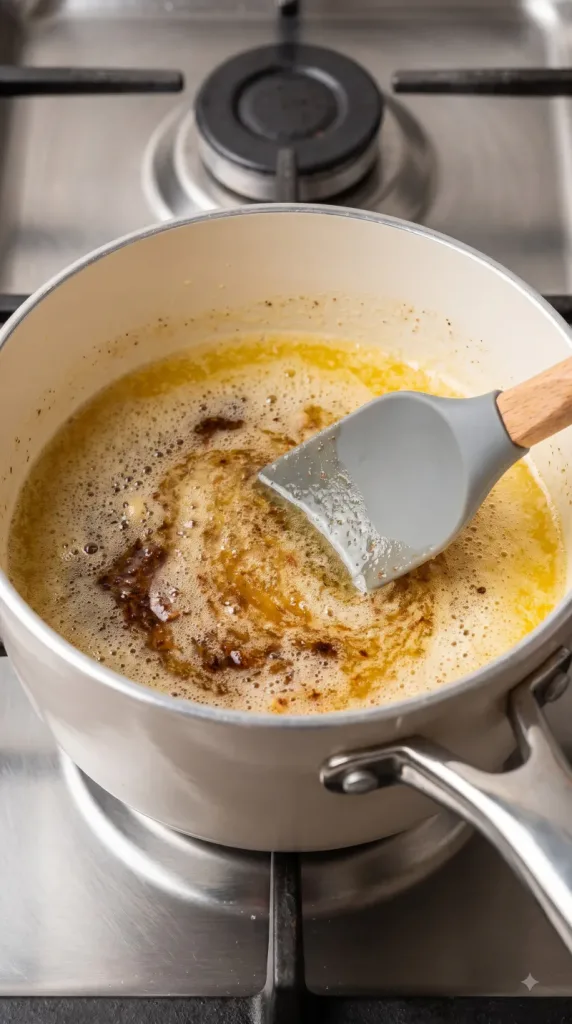
Add 1 tablespoon unsalted butter to a small, pale-interior saucepan over medium-low heat.
Stir with a silicone spatula as the butter melts, foams, and develops golden-brown specks, about 2–4 minutes depending on the pan and stove.
Remove the pan from the heat as soon as the milk solids turn golden brown and smell nutty. Keep the toasted specks; discard the butter and start again if they turn black or smell burned.
Step 2: Blend the Coffee Base
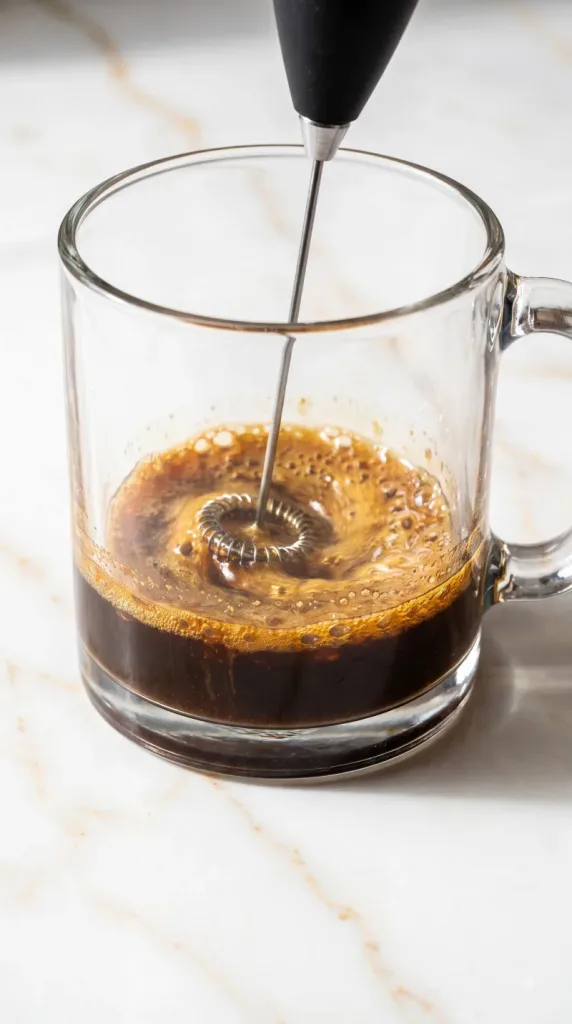
Brew 2 fluid ounces espresso directly into the heat-safe serving mug and add 2 teaspoons packed light brown sugar.
Scrape all the browned butter from Step 1, including the golden milk solids, into the espresso with the silicone spatula.
Place the handheld frother head below the surface and blend for 10–15 seconds, until the sugar dissolves and the butter is finely dispersed. Keep the frother submerged to reduce splashing.
Step 3: Warm and Froth the Milk
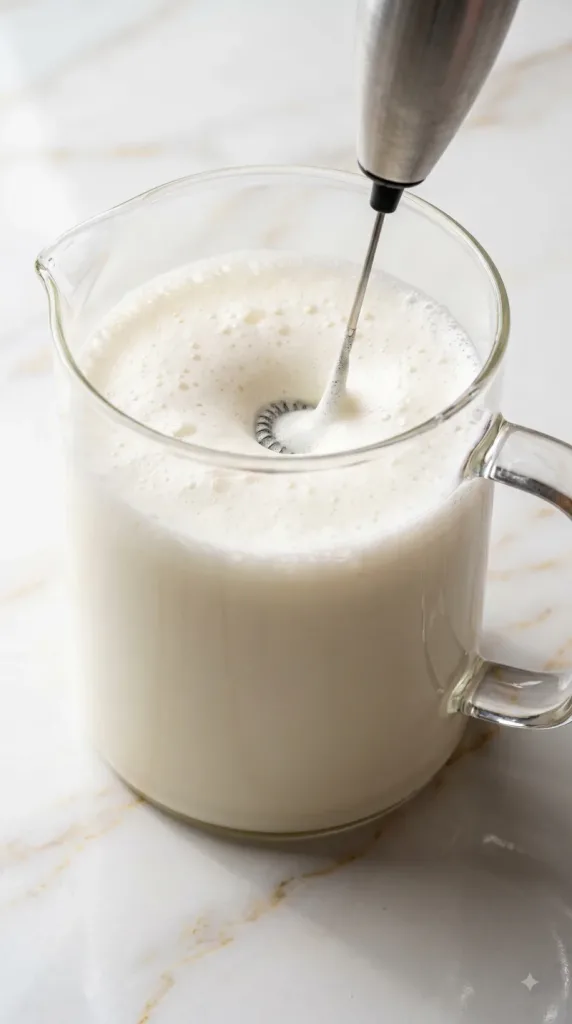
Pour 1 cup whole milk into a microwave-safe glass jug with plenty of room above the milk.
Microwave in 30-second intervals, checking and swirling between intervals, for about 1–2 minutes total, until the milk is warm enough to drink, about 140–150°F (60–65°C). Do not let it boil; microwave strength changes the heating time.
Froth the warmed milk for 15–20 seconds to make a fine, pourable foam rather than a stiff mound.
Step 4: Pour the Milk
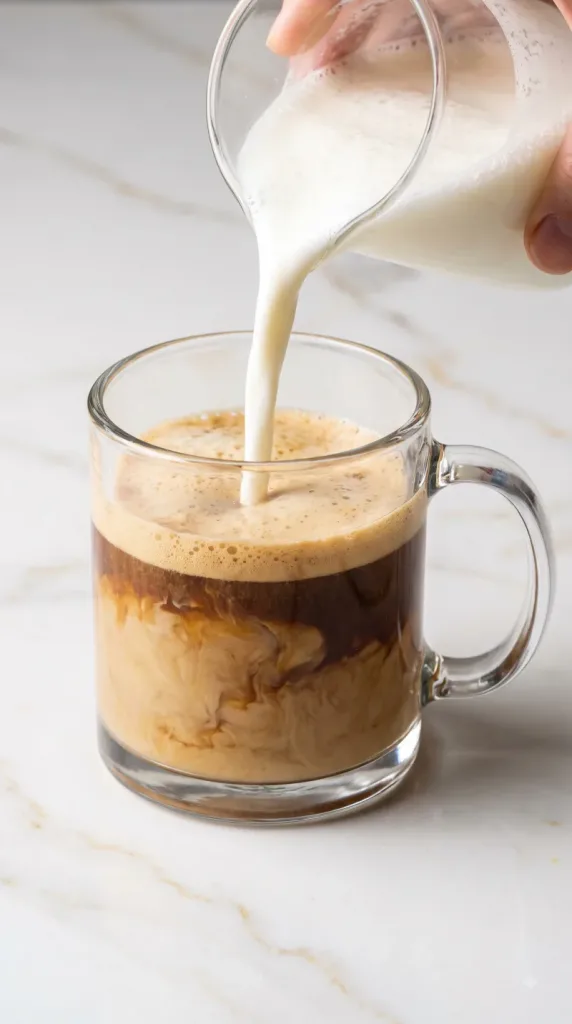
Pour all the warmed milk and foam from Step 3 into the espresso-butter mixture from Step 2, using a steady stream to blend the liquids.
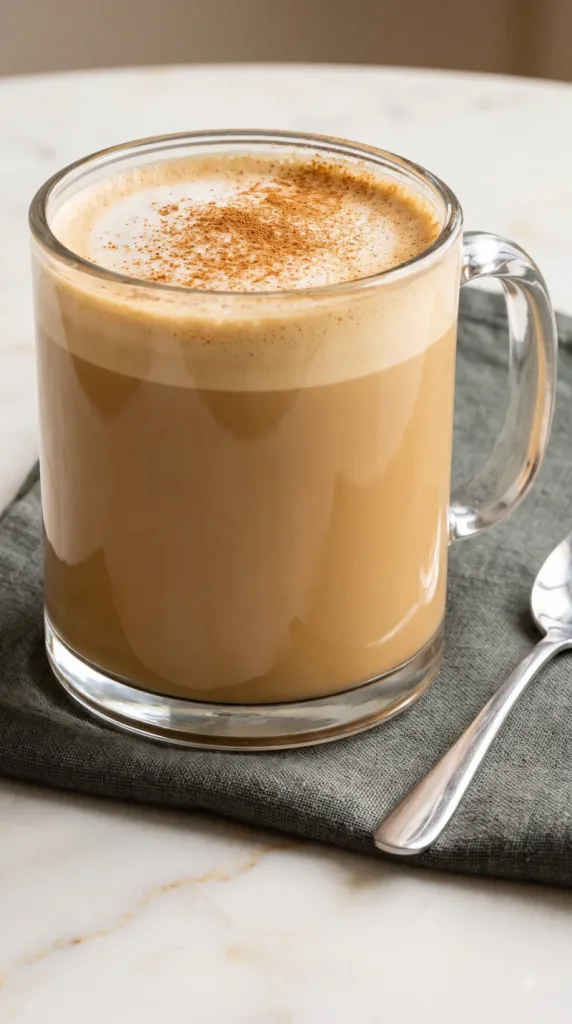
Leave the thin foam cap on top, with the liquid just below the rim. Serve promptly, since butter can gather at the surface as the drink sits.
Step 5: Finish and Serve
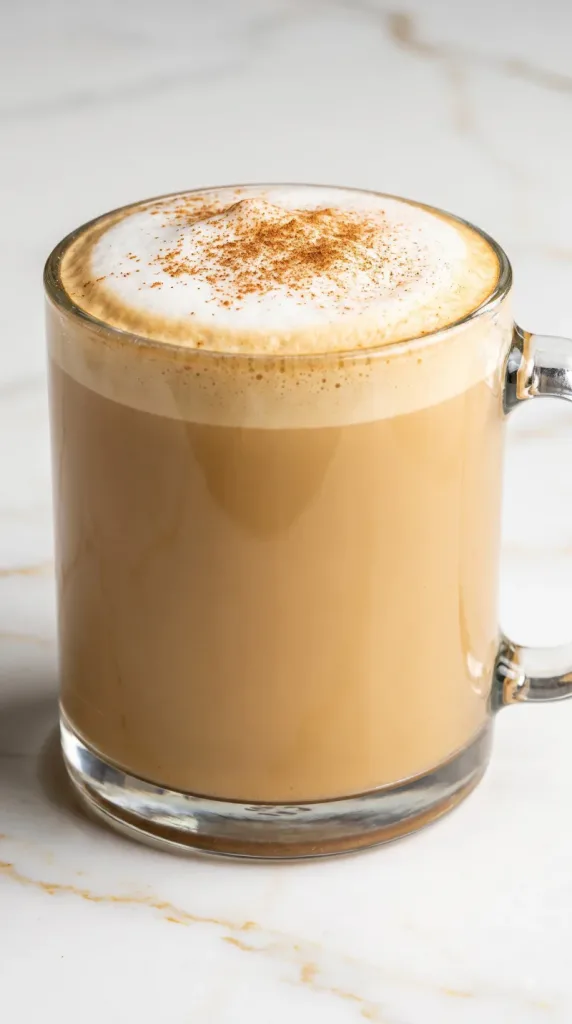
Dust 1/16 teaspoon ground cinnamon evenly over the foam.
Enjoy right away while the coffee is warm and the butter is well dispersed.
Why This Recipe Works (Quick Science)
Butter contains fat, water, and milk solids. As the water cooks away, the milk solids brown and develop toasted flavors. Pulling the pan off the heat at the golden-brown stage keeps those flavors pleasant rather than bitter.
The frother breaks the melted butter into small droplets in the espresso. Milk proteins help the finished drink stay blended for a short time, but this is not a permanent emulsion. That is why blending well and serving promptly matter. Brown sugar adds a mild molasses note, and the small cinnamon topping gives aroma without making the drink taste strongly spiced.
Common Mistakes to Avoid
- Using high heat: A small amount of butter burns quickly. Use medium-low heat and watch the solids closely.
- Leaving the browned butter in the pan: Scrape in the golden specks, which carry much of the flavor.
- Skipping the blending: Stirring alone may leave a more noticeable butter slick.
- Boiling the milk: Overheated milk can taste cooked and makes less pleasant foam.
- Adding too much cinnamon: A heavy layer can feel dusty. Use the small measured topping.
- Letting the latte sit: The butter can separate as the drink cools. A quick stir helps bring it back together.
Substitutions and Variations
- Without an espresso machine: Replace the espresso with 2 fluid ounces of strongly brewed coffee. The coffee flavor may be softer.
- Less sweet: Reduce the brown sugar to 1 teaspoon. The nutrition estimate will change.
- Different milk: Use 1 cup barista-style oat milk in place of whole milk. Keep the butter for its browned flavor; the drink will still contain dairy.
- Salted butter: It works in the same amount, though it adds a salty note and more sodium.
What to Serve With Hot Brown Butter Latte
A plain croissant, butter cookie, or slice of banana bread pairs well with the toasted flavor. For a less sweet choice, try simple toast or a small bowl of oatmeal. Keep the pairing mild so the brown butter and espresso can stand out.
Macros Information
Estimated per serving, using whole milk and all the listed ingredients:
- Calories: 290 kcal
- Protein: 8 g
- Carbohydrates: 22 g
- Fat: 20 g
- Saturated Fat: 12 g
- Fiber: 0 g
- Sugar: 20 g
- Sodium: 110 mg
These values are estimates and vary with ingredient brands and measured amounts.
Frequently Asked Questions (FAQ)
Q: Does brown butter taste like nuts?
A: It has a toasted, nutty flavor from the browned milk solids. This recipe does not include nuts.
Q: Can I use ghee?
A: Ghee lacks the milk solids needed for this browning step. Use regular butter for the flavor described here.
Q: Why is there butter on top of my latte?
A: Butter can separate as the drink rests. Blend the coffee base well, add the milk promptly, and enjoy it right away. Stir if a small slick forms.
Q: Can I make it without a frother?
A: Whisk the coffee base briskly, then whisk the warmed milk before pouring it in. Expect less foam and a little more separation.
Q: Can I use decaf espresso?
A: Yes. Use the same amount of decaf espresso; the rest of the recipe stays the same.
Q: Is this latte very sweet?
A: It is lightly sweetened rather than syrupy. The brown sugar balances the espresso while keeping the toasted butter flavor clear.
Q: Can I make the brown butter ahead?
A: Yes. Transfer it to a covered heat-safe container and refrigerate for up to a week. For this single serving, use the entire browned portion from the original tablespoon of butter. Melt it gently before blending it into the espresso.
Q: Can I store the finished latte?
A: It tastes best freshly made because the foam falls and the butter may separate. Make a fresh serving when possible rather than storing the assembled drink.
Q: Can I skip the cinnamon?
A: Yes, though the light cinnamon dusting adds a pleasant aroma. The brown butter still gives the drink plenty of flavor on its own.
Final Thoughts
Hot Brown Butter Latte is a simple way to give your coffee a toasted, creamy twist. Watch the butter closely, blend the base well, and finish with that light cinnamon dusting. Leave a comment with your favorite way to enjoy it. Happy sipping!