
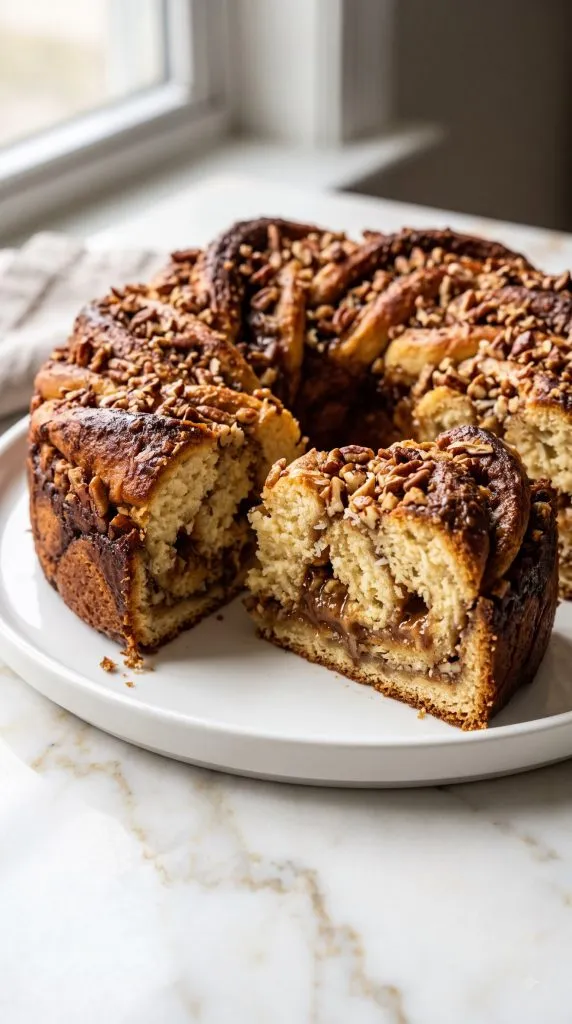
This Pecan Praline Coffee Cake is soft, buttery, and packed with a gooey brown sugar and pecan filling.
The top gets golden while the praline bubbles into the dough, giving you sweet, nutty flavor in almost every bite.
It’s the kind of coffee cake that feels special enough for a holiday morning but still works for a relaxed weekend breakfast.
This version takes inspiration from the pecan-praline coffee cake braid you shared, including its sweet yeast dough, pecans, brown sugar, butter, and warm spices, while turning those ideas into a homemade coffee cake.
Makes: 10 servings
Prep time: 25 minutes
Rise time: 1 hour 15 minutes
Bake time: 30–35 minutes
Total time: About 2 hours 15 minutes

Why I Love This Recipe
Pecan coffee cake always reminds me of slow weekend mornings when there is actually time to sit down with a warm cup of coffee instead of rushing out the door. There is something about the smell of butter, brown sugar, cinnamon, and toasted pecans coming from the oven that makes the whole kitchen feel cozy.
I especially like this version because the praline mixture does more than sit on top. Some of it melts into the dough as the cake bakes, so you get sweet, buttery pockets throughout the cake.
- The dough stays soft and tender.
- Brown sugar and butter create a rich praline flavor.
- Pecans give every slice a little crunch.
- Cinnamon, nutmeg, and cloves add warmth without taking over.
- It looks impressive but uses simple baking techniques.
- You can prepare much of it ahead for an easier morning.
What You’ll Need
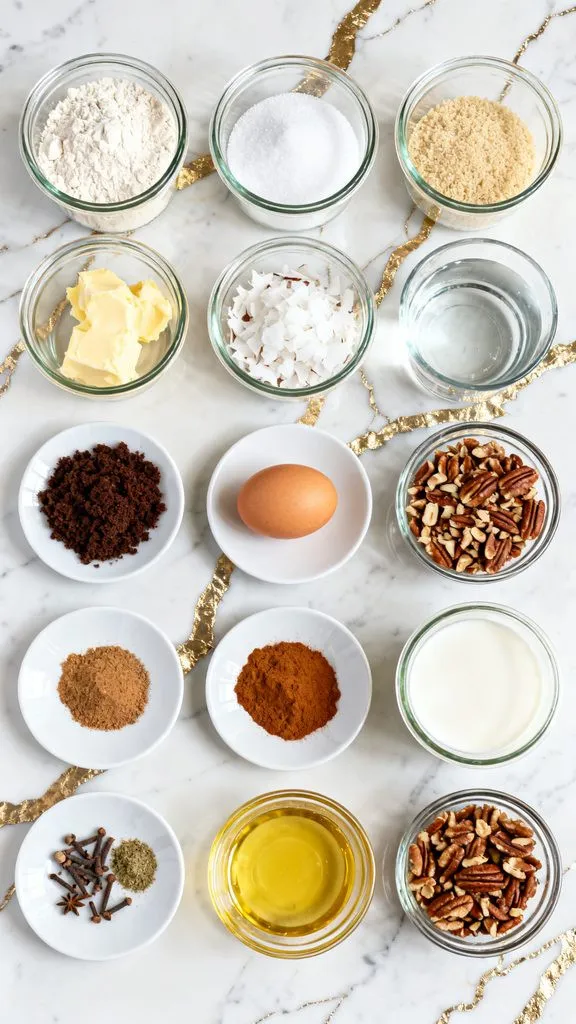
For the coffee cake dough
- 3 cups all-purpose flour, divided as needed
- 2 1/4 teaspoons active dry yeast, 1 standard packet
- 3 tablespoons granulated sugar
- 1/2 teaspoon salt
- 1 cup warm water, about 110°F
- 3 tablespoons unsalted butter, softened
- 1 large egg, room temperature
For the pecan praline filling
- 1 cup pecans, finely chopped
- 1/2 cup sweetened flaked coconut
- 1/2 cup packed dark brown sugar
- 6 tablespoons unsalted butter, melted
- 2 tablespoons whole milk
- 1/2 teaspoon ground cinnamon
- 1/4 teaspoon ground nutmeg
- 1/4 teaspoon ground cloves
For finishing
- 2 tablespoons unsalted butter, melted
- 1/4 cup pecans, chopped
Recipe and Instructions
Step 1: Start the Dough
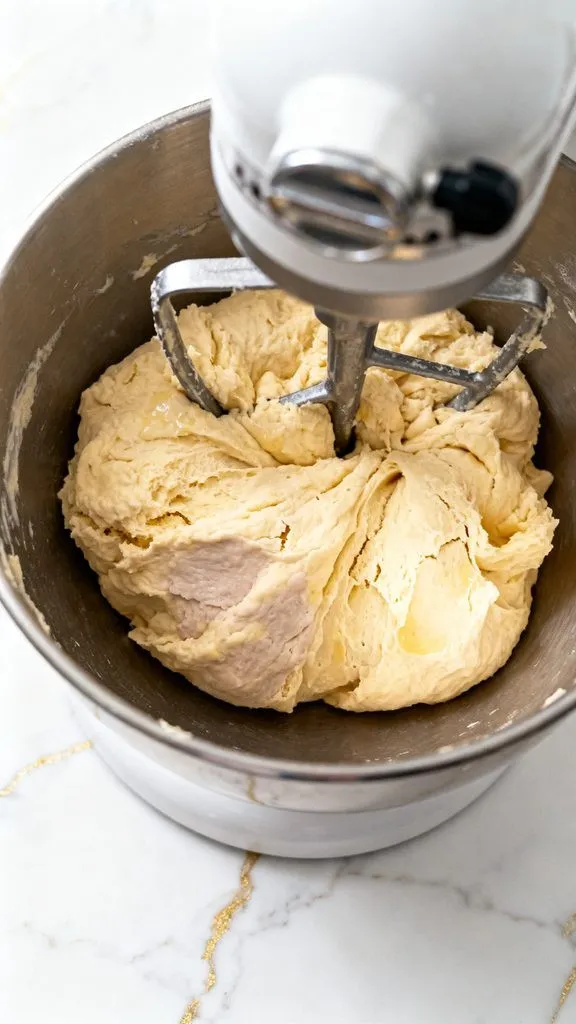
Add 2 1/2 cups of the all-purpose flour, 2 1/4 teaspoons active dry yeast, 3 tablespoons granulated sugar, and 1/2 teaspoon salt to the bowl of a stand mixer. Mix briefly with the dough hook.
Pour in 1 cup warm water, then add 3 tablespoons softened unsalted butter and 1 room-temperature large egg. Mix on low until a shaggy dough forms.
Step 2: Knead and Let the Dough Rise
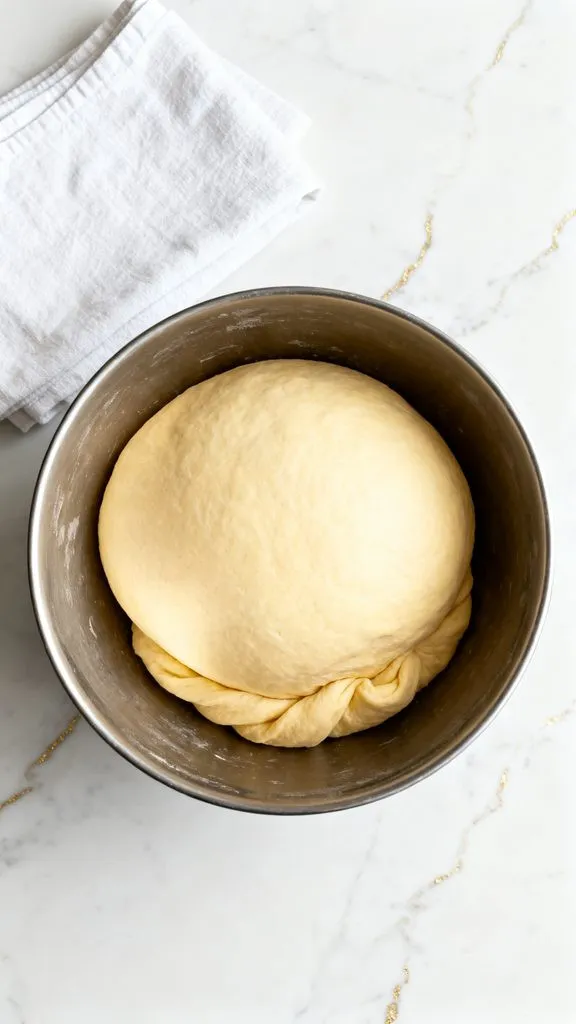
Mix the dough on medium-low speed for about 5–6 minutes. Add some or all of the remaining 1/2 cup all-purpose flour, 1 tablespoon at a time, only until the dough becomes soft, smooth, and slightly tacky. You may not need every bit of it.
Shape the dough into a ball. Place it back in the bowl, cover it with a clean towel, and let it rise in a warm spot for 45–60 minutes, or until roughly doubled.
Step 3: Make the Pecan Praline Filling
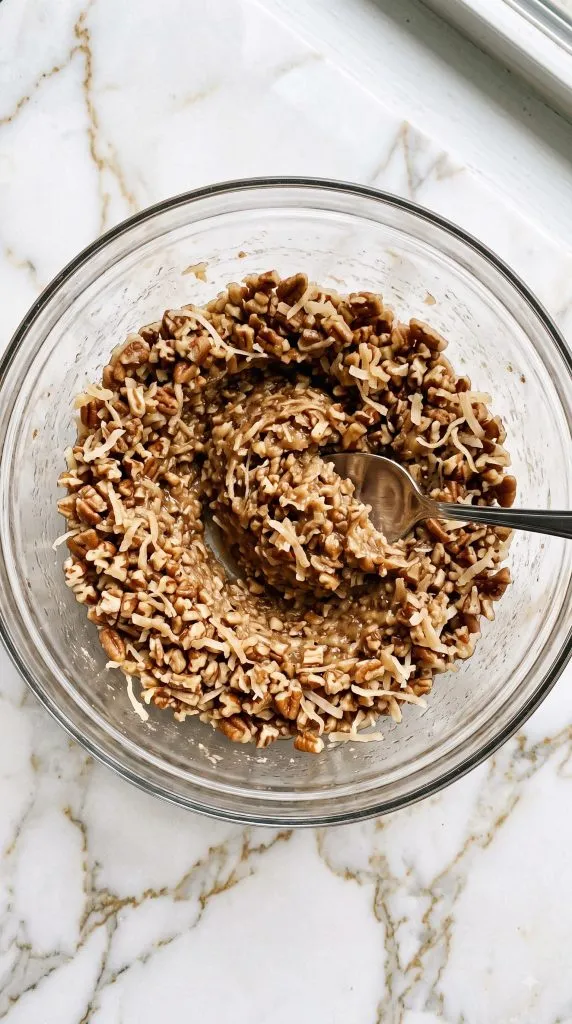
While the dough rises, add 1 cup finely chopped pecans, 1/2 cup sweetened flaked coconut, 1/2 cup packed dark brown sugar, 6 tablespoons melted unsalted butter, 2 tablespoons whole milk, 1/2 teaspoon ground cinnamon, 1/4 teaspoon ground nutmeg, and 1/4 teaspoon ground cloves to a medium bowl.
Stir until everything is evenly coated. The filling should look thick, buttery, and slightly sticky rather than runny.
Step 4: Fill and Shape the Coffee Cake
Lightly flour the work surface if needed. Roll the risen dough into a rectangle about 14 x 10 inches and roughly 1/4 inch thick.
Spread the entire pecan praline filling evenly over the dough, leaving about a 1/2-inch border around the edges.
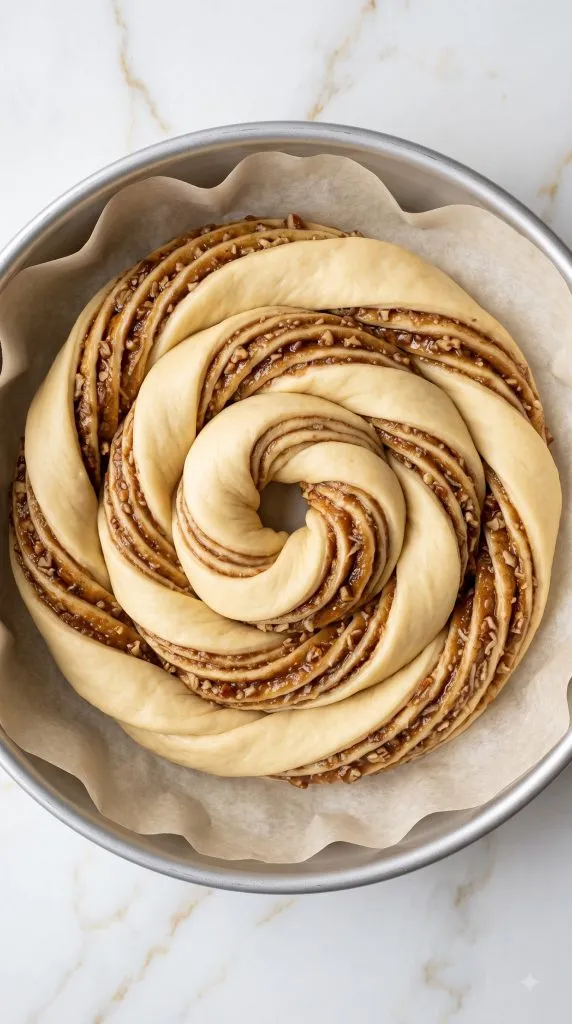
Starting at one long side, tightly roll the dough into a log. Slice the log lengthwise into two long pieces so the layers are exposed. Twist the two pieces together with the cut sides facing upward.
Coil the twisted dough into a round shape and carefully place it in a parchment-lined 9-inch round cake pan.
Step 5: Let It Rise Again
Cover the shaped coffee cake loosely with a clean towel. Let it rise for 25–30 minutes. It should become noticeably puffy, but it does not need to double again.
During the last part of the rise, preheat the oven to 350°F (175°C).
Step 6: Add the Pecan Topping
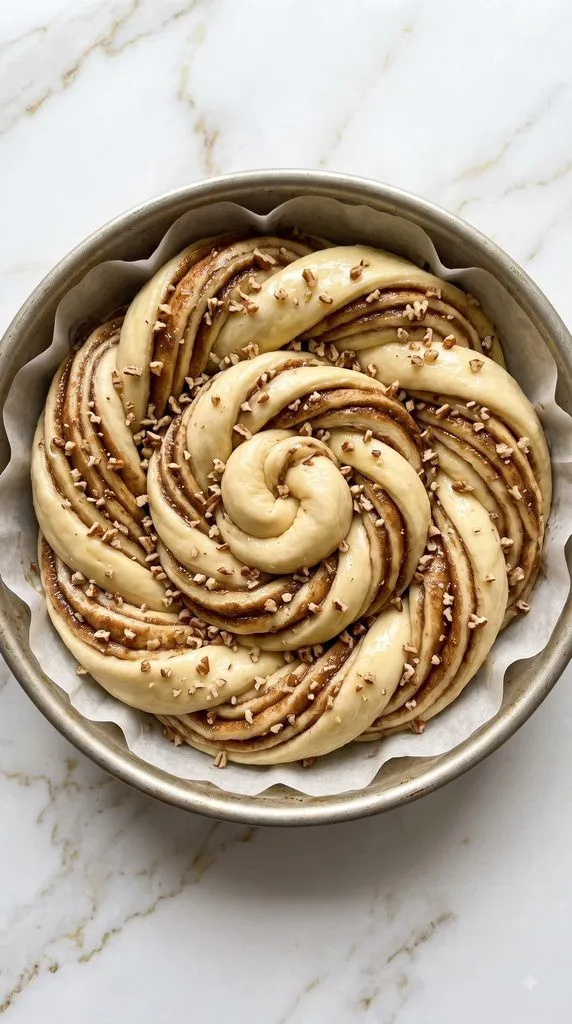
Brush the risen coffee cake with 2 tablespoons melted unsalted butter. Sprinkle 1/4 cup chopped pecans evenly over the top.
Press the pecans very lightly into the dough so they stay in place without flattening the risen cake.
Step 7: Bake
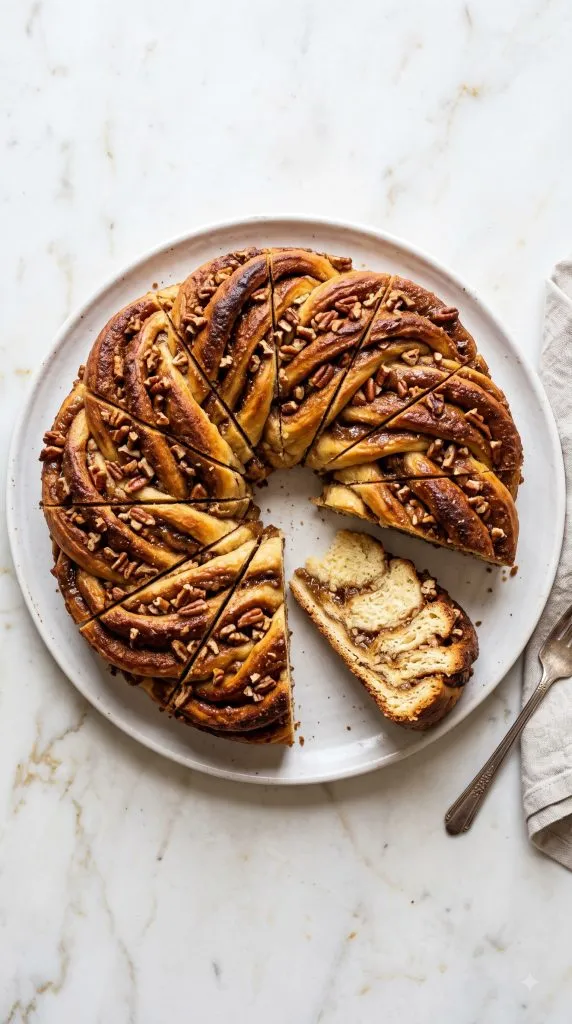
Bake at 350°F (175°C) for 30–35 minutes. The top should be deep golden brown, and the praline should be visibly bubbling between the layers.
If the top browns too quickly, loosely cover it with foil for the final 10 minutes. The center should reach about 190°F when checked with an instant-read thermometer.
Step 8: Cool and Serve
Let the cake cool in the pan for 10 minutes. Carefully lift it out using the parchment and transfer it to a wire rack for another 10–15 minutes.
Place the warm cake on a round serving plate and cut it into 10 slices. The cake is especially good while the praline filling is still slightly warm and gooey.
Why This Recipe Works (Quick Science)
Yeast gives the cake its soft texture. Yeast creates tiny bubbles of carbon dioxide as the dough rises. Those bubbles help make the finished coffee cake light instead of heavy.
Butter keeps it tender. Fat coats some of the flour proteins and helps limit gluten development. That gives you a softer, richer crumb.
Brown sugar makes better praline. Dark brown sugar contains molasses, so it brings extra moisture and a deeper caramel flavor. When it heats with butter, it creates the sticky praline texture between the layers.
The twisted shape spreads out the filling. Cutting and twisting the filled dough exposes more layers. That means more golden edges and more pockets of caramelized pecans.
A second rise matters. Shaping knocks some gas out of the dough. The second rise gives the yeast time to build those air pockets again before baking.
Pro Tips
- Keep the water around 110°F. Very hot water can damage the yeast, while cold water makes the dough rise more slowly.
- Don’t add all the extra flour automatically. A slightly tacky dough makes a softer coffee cake.
- Chop the pecans fairly small. Large pieces can make rolling and twisting the dough harder.
- Put the pan on a baking sheet if you’re worried about bubbling praline dripping in the oven.
- Wait at least 10 minutes before slicing. Straight from the oven, the hot praline can run out of the cake and the soft crumb can tear.
Tools You’ll Need
- Stand mixer with dough hook
- Large mixing bowl
- Medium mixing bowl
- Measuring cups
- Measuring spoons
- Rolling pin
- Wooden spoon or silicone spatula
- Pastry brush
- Sharp knife
- 9-inch round cake pan
- Parchment paper
- Clean kitchen towel
- Instant-read thermometer, optional but helpful
- Wire cooling rack
- Round serving plate
Substitutions and Variations
Walnuts: Replace the pecans with the same amount of chopped walnuts for a slightly different nutty flavor.
No coconut: Leave out the 1/2 cup coconut if you don’t like it. The filling will still work, though it will be a little softer.
Light brown sugar: You can use light brown sugar instead of dark brown sugar. The praline will have a milder molasses flavor.
Milk: Whole milk gives the filling richness, but 2% milk works too.
Extra cinnamon: Increase the cinnamon from 1/2 teaspoon to 1 teaspoon if you want a stronger cinnamon flavor.
Simple glaze: For a sweeter bakery-style finish, drizzle the cooled cake with a basic powdered sugar and milk glaze.
Make-Ahead Tips
You can shape the cake and place it in the pan the night before. Cover it tightly and refrigerate overnight. The original recipe you provided also uses an overnight option for the shaped dough.
The next morning, take the cake from the refrigerator and let it sit at room temperature for about 30–45 minutes, or until slightly puffy. Brush with the finishing butter, add the pecans, and bake as directed.
You can also prepare the pecan praline filling one day ahead. Cover and refrigerate it, then let it soften at room temperature before spreading it over the dough.
Common Mistakes
Using water that’s too hot: Water well above 120°F can hurt the yeast. Aim for comfortably warm water around 110°F.
Adding too much flour: This is one of the easiest ways to end up with dry coffee cake. Add the last 1/2 cup only as needed.
Skipping the rise: Give the yeast enough time to work. If your kitchen is cool, the dough may take longer than the listed time.
Rolling the dough too loosely: A loose roll creates large empty spaces between the filling and dough. Roll firmly but don’t crush the dough.
Underbaking the center: The sugary filling can make the outside look done before the middle is fully baked. Look for a deep golden color and aim for about 190°F in the center.
Cutting immediately: The praline is extremely hot and loose right after baking. Cooling briefly gives it time to thicken.
What to Serve With Pecan Praline Coffee Cake
This cake is rich and sweet, so simple drinks and lighter foods pair with it nicely. Serve it with hot coffee, cold brew, black tea, chai, or a glass of cold milk.
For a larger brunch, add scrambled eggs, bacon or breakfast sausage, and a fresh fruit salad. The savory foods and fresh fruit balance the buttery praline cake.
Leftovers and Storage
Keep leftover coffee cake in an airtight container at room temperature for up to 2 days.
For longer storage, refrigerate it for up to 5 days. Warm individual slices in the microwave for about 10–15 seconds before serving.
You can also freeze individual slices. Wrap each slice well and place them in a freezer-safe container for up to 2 months. Thaw overnight in the refrigerator or for a few hours at room temperature, then warm gently before eating.
Macros Information
Approximate nutrition per serving, based on 10 servings:
- Calories: 450
- Protein: 7 g
- Carbohydrates: 49 g
- Fat: 26 g
- Saturated fat: 11 g
- Fiber: 3 g
- Sugar: 17 g
These are estimates and will change depending on the exact brands and ingredient amounts used.
FAQ
Can I make Pecan Praline Coffee Cake without a stand mixer?
Yes. Stir the dough together with a wooden spoon, then knead it by hand for about 8–10 minutes until smooth and elastic.
Does coffee cake contain coffee?
Usually, no. The name comes from the tradition of serving this type of cake alongside coffee. There is no coffee in this recipe.
How do I know when the dough has risen enough?
For the first rise, look for the dough to roughly double in size. For the second rise, it only needs to become soft and noticeably puffy.
Can I leave out the coconut?
Yes. Simply leave out the 1/2 cup sweetened flaked coconut. You don’t need to replace it with anything.
Why did my coffee cake turn out dry?
Too much flour or too much baking time are the most common causes. Keep the dough slightly tacky and begin checking the cake around the 30-minute mark.
Can I toast the pecans first?
Yes. Toasting them for about 5–7 minutes at 350°F will deepen their nutty flavor. Let them cool before using them in the filling.
Can I freeze the whole cake?
Yes. Let it cool completely, wrap it tightly, and freeze it for up to 2 months. Thaw it before warming.
Final Thoughts
This Pecan Praline Coffee Cake has everything I want in a cozy homemade bake: soft dough, buttery brown sugar praline, toasted pecans, warm spices, and plenty of caramelized edges.
Give the dough time to rise, don’t overload it with flour, and keep an eye on that beautiful golden top as it bakes. Once you pull it from the oven and smell the bubbling brown sugar, butter, cinnamon, and toasted pecans, waiting those few extra minutes before cutting a slice might be the hardest part.
Make it for breakfast, brunch, a holiday morning, or simply because you’re craving something warm and homemade. When you make it, leave a comment and share how yours turned out, any changes you tried, or any questions you have.