
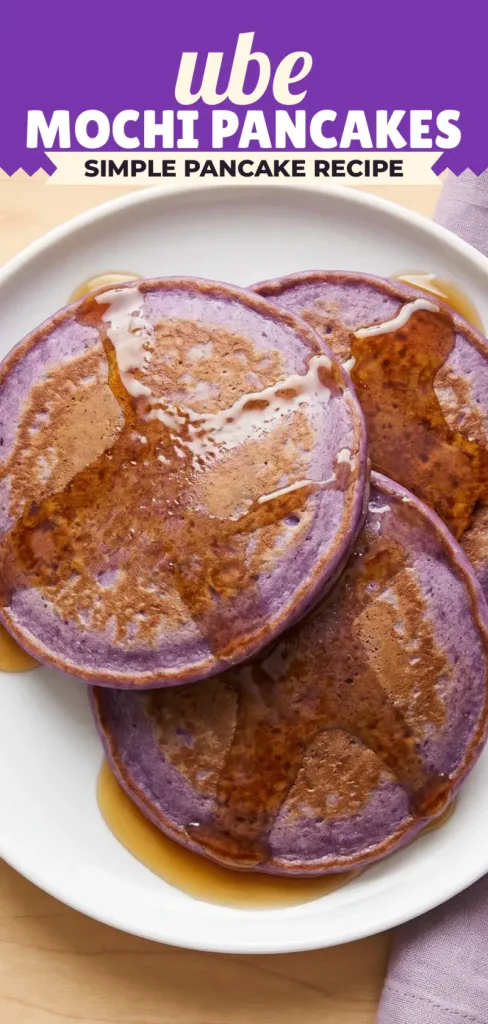
Ube Mochi Pancakes bring a soft, springy bite to the breakfast table. Sweet rice flour gives them their mochi-like chew, while coconut milk adds richness. This version uses ube extract for its sweet, nutty flavor and purple color, so there is no yam to cook first. Keep the pancakes small and cook them gently for tender centers and lightly browned tops.
Why I Love This Recipe
The charm here is the texture: soft at the edges, pleasantly chewy in the middle, and rich enough to enjoy plain. These are less airy than wheat-flour pancakes, which makes each small stack feel special. The batter comes together with a bowl and whisk, and the short rest gives you time to get the pan ready.
- A springy bite: Mochiko gives these pancakes their signature chew.
- Simple ube flavor: Extract adds flavor without making a separate yam mixture.
- Gentle sweetness: A little sugar makes the pancakes easy to enjoy on their own.
- Small, easy portions: Modest rounds are easier to flip and cook through.
What You’ll Need
- Servings: 4, with 3 pancakes per serving
- Yield: About 12 pancakes, each about 4 inches across
- Prep Time: 10 minutes, including a 5-minute batter rest
- Cook Time: 25 minutes, including pan heating and brief cooling
- Total Time: 35 minutes
- Pan: 12-inch nonstick skillet
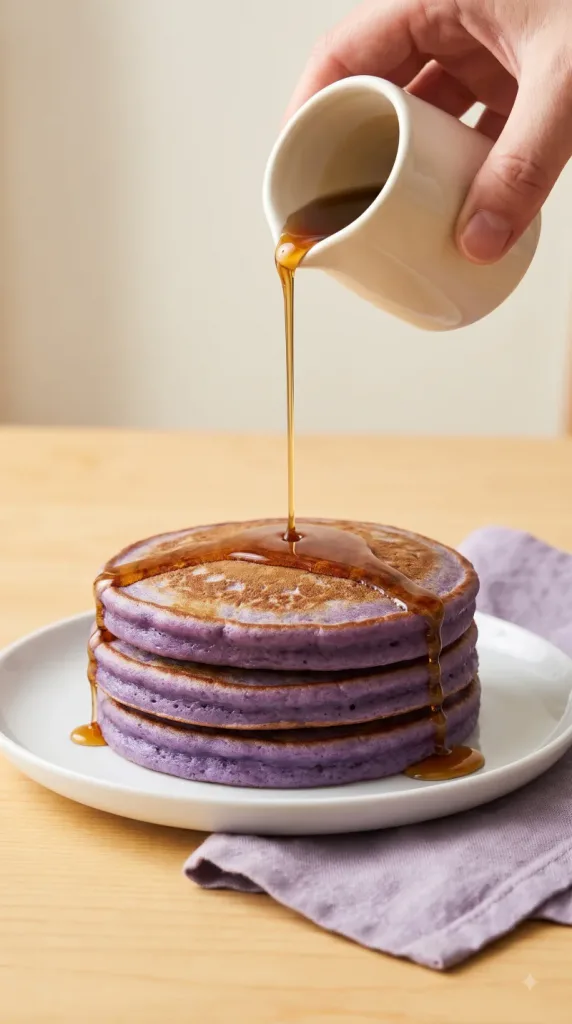
Ingredients:
- 2 cups (320 g) mochiko sweet rice flour, also called glutinous rice flour
- 1/4 cup (50 g) granulated sugar
- 2 teaspoons baking powder
- 1/2 teaspoon fine salt
- 1 cup (240 ml) canned full-fat unsweetened coconut milk, stirred smooth before measuring
- 6 tablespoons (90 ml) room-temperature water
- 2 large eggs, at room temperature
- 2 tablespoons (28 g) unsalted butter, melted and cooled slightly
- 1 teaspoon ube extract
- 2 teaspoons neutral oil, divided, for the skillet
Use sweet rice flour, not ordinary white rice flour. Despite its name, glutinous rice flour does not contain gluten. Check the other ingredient labels if you need the whole recipe to be gluten-free. Ube extract varies in strength and color by brand; this is an extract-flavored recipe, not a fresh-ube puree recipe.
Tools You Need
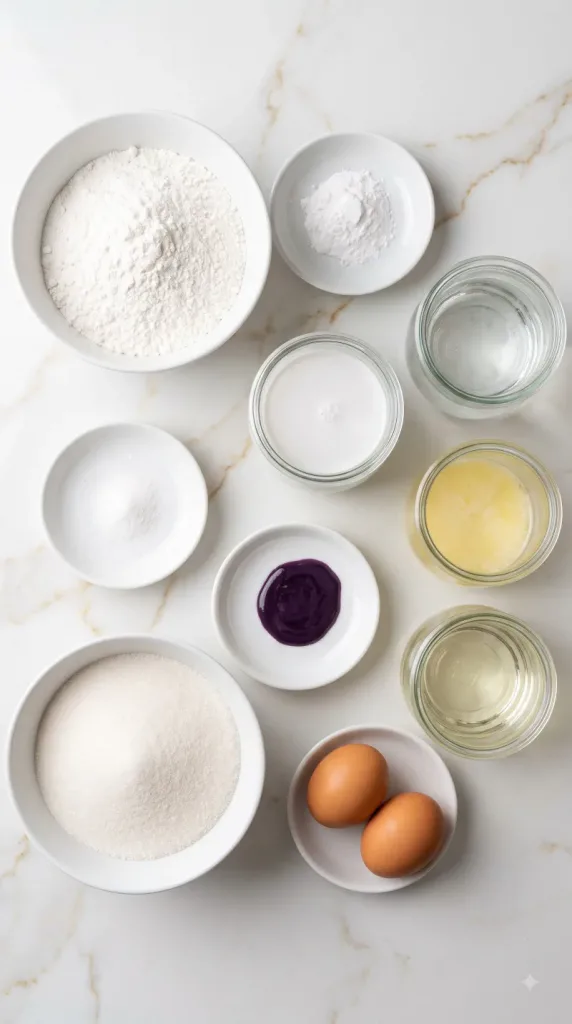
- Kitchen scale and measuring cups and spoons
- Large glass mixing bowl
- Whisk
- 12-inch nonstick skillet
- Flexible spatula
- 1/4-cup scoop
- Cooling rack
How to Make Ube Mochi Pancakes
Mix a thick, pourable batter, then cook small rounds over steady, gentle heat.
Step 1: Combine the Dry Ingredients
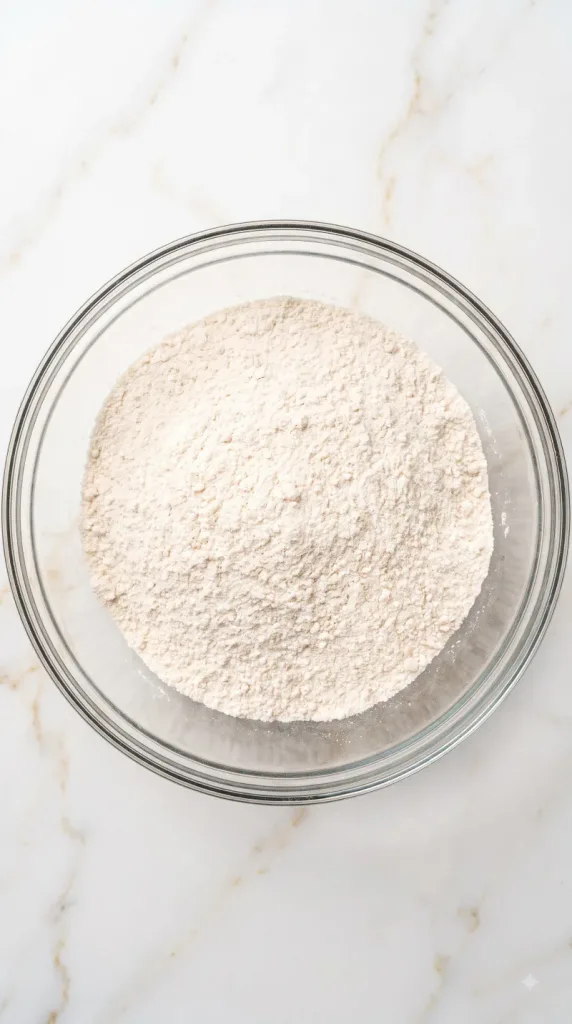
Whisk 2 cups (320 g) mochiko sweet rice flour, 1/4 cup (50 g) granulated sugar, 2 teaspoons baking powder, and 1/2 teaspoon fine salt in a large glass bowl.
Break up any flour lumps so the raising agent spreads evenly through the batter.
Step 2: Make and Rest the Batter
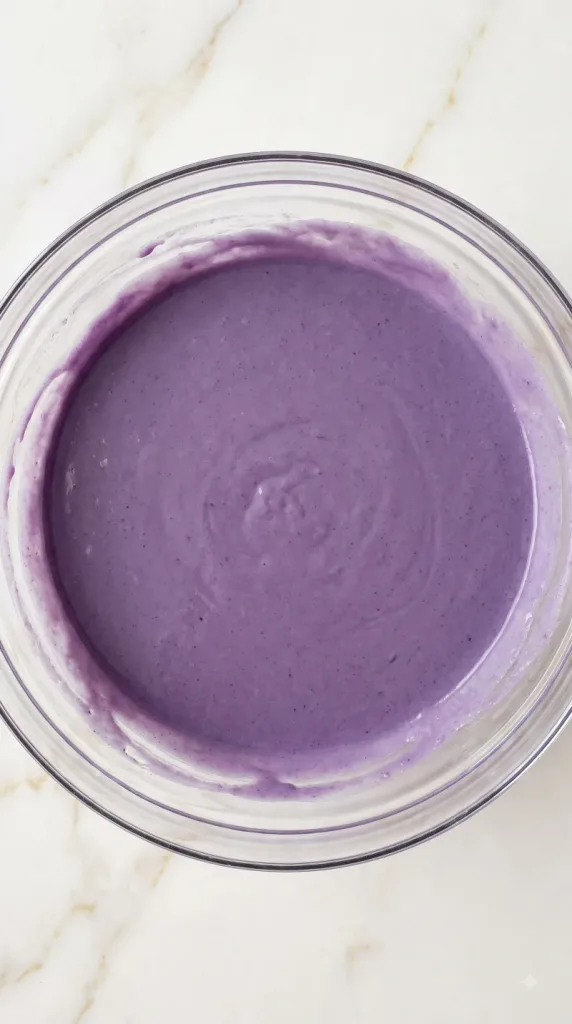
Add 1 cup (240 ml) stirred coconut milk, 6 tablespoons (90 ml) water, 2 large eggs, 2 tablespoons (28 g) melted unsalted butter, and 1 teaspoon ube extract to the dry mixture.
Whisk until smooth, scraping the bottom of the bowl to catch dry flour.
Rest the batter for 5 minutes. It should fall from the whisk in a thick, continuous ribbon and slowly spread when scooped. Stir it briefly before portioning; it should not hold a stiff mound like dough.
Step 3: Cook in Small Batches
Heat a 12-inch nonstick skillet over medium-low heat for 2 minutes.
Spread 1/2 teaspoon neutral oil thinly across the skillet. Reserve the remaining 1 1/2 teaspoons neutral oil for the next three batches.
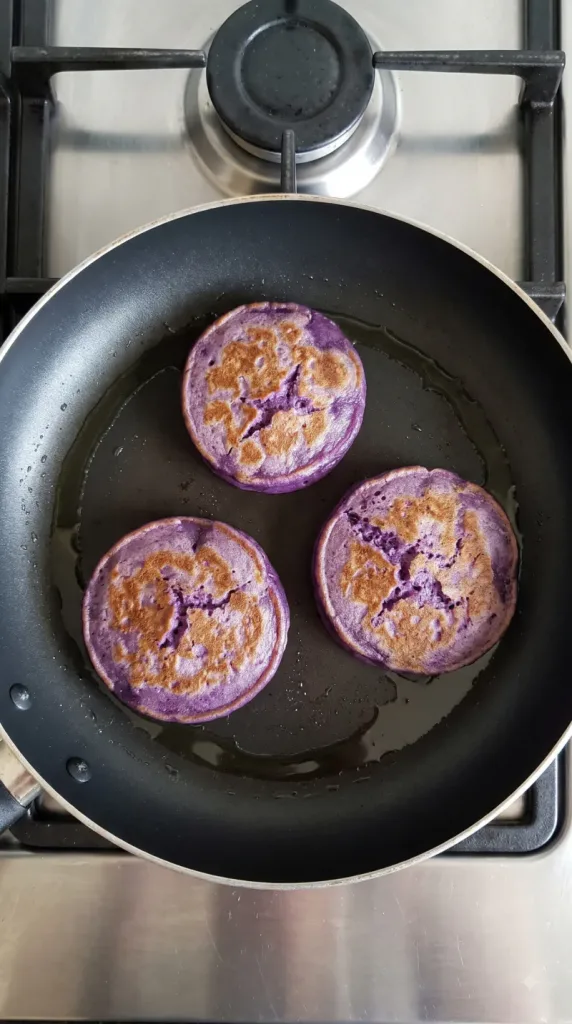
Scoop a scant 1/4 cup batter per pancake, making 3 pancakes per batch. Let each round spread to about 4 inches across, leaving space between them.
Cook the first side for 2–3 minutes, until the edges look set and the underside is lightly golden. Surface holes can be subtle in this batter, so check the edges and underside before flipping.
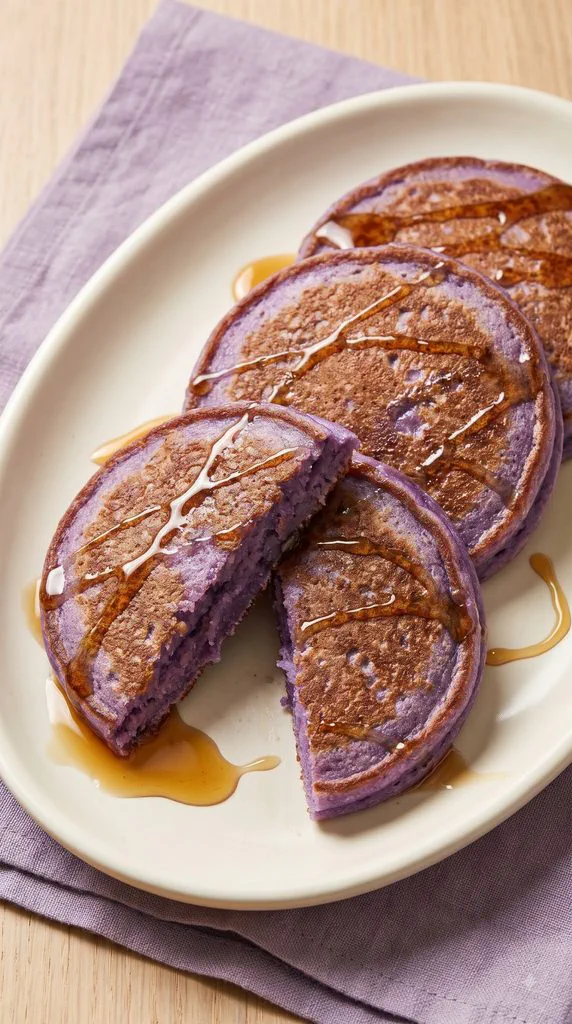
Flip once and cook for 2–3 minutes, until both sides are set and the center springs back gently. Lower the heat if the outside darkens before the middle sets. The center should be chewy and moist, with no wet batter or paste-like streaks.
Repeat for 3 more batches, using 1/2 teaspoon reserved neutral oil per batch. Divide the batter evenly to make about 12 pancakes. Transfer cooked pancakes to a rack in a single layer as you go.
Step 4: Let Them Set and Serve
Let each batch sit on the rack for 1 minute so the centers settle and the bottoms stay less damp.
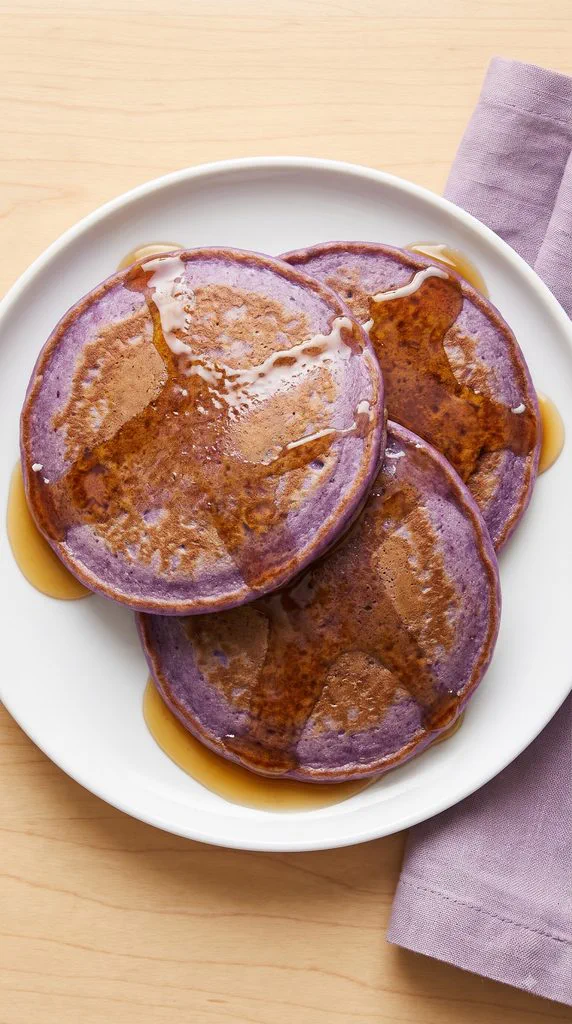
Serve 3 pancakes per person, plain, while still warm. Avoid pressing down on the stacks, which can make the centers feel dense.
Why This Recipe Works (Quick Science)
Mochiko is made from sticky rice. Its starch gives the cooked batter a soft, elastic bite rather than the fluffy crumb of a wheat pancake. Baking powder adds some lift, while eggs help the pancakes hold together when flipped. Coconut milk and butter add fat, which keeps the texture tender.
A short rest lets the flour absorb liquid. Gentle heat gives the center time to set before the outside gets too brown. A slight chew is the goal; a wet, paste-like center needs more cooking.
Common Mistakes to Avoid
- Using regular rice flour: It will not give the same stretchy chew as mochiko.
- Swapping in ube jam: Jam adds sugar, moisture, and solids. It cannot replace the extract spoon for spoon.
- Using high heat: Dark surfaces can hide a center that still needs cooking.
- Making large pancakes: Small rounds flip more easily and set more evenly.
- Waiting for lots of surface bubbles: Check the set edges and underside instead.
- Stacking every batch right away: Trapped moisture softens the bottoms. Use a rack first.
Leftovers and Storage
Let the pancakes cool fully, then store them in a sealed container in the refrigerator for up to 3 days. Separate layers with parchment so they lift apart easily.
Freeze them in a single layer, then move them to a freezer bag for up to 2 months. Reheat thawed pancakes in a dry nonstick skillet over low heat until warm through. A microwave works too, but use short bursts; long heating can make the edges tough. Chilled mochiko pancakes firm up, so reheating improves their texture.
Macros Information
Estimated per serving of 3 pancakes, including the cooking oil:
- Calories: 515 kcal
- Protein: 9 g
- Carbohydrates: 80 g
- Fat: 19 g
- Saturated Fat: 13 g
- Fiber: 2 g
- Sugar: 14 g
- Sodium: 530 mg
These are estimates. Coconut milk, ube extract, and baking powder brands can change the values.
Frequently Asked Questions (FAQ)
Q: What is mochiko?
A: Mochiko is a finely ground sweet rice flour. It gives these pancakes their soft, chewy center. It is not the same as regular rice flour or rice starch.
Q: Is there mochi inside each pancake?
A: No. The chew comes from sweet rice flour mixed into the batter. There are no separate mochi pieces.
Q: Do these contain real mashed ube?
A: This version uses ube extract rather than cooked yam. Extract ingredients vary, so check your label if you want to know whether it contains real ube.
Q: Can I replace the extract with ube halaya?
A: Not directly. Halaya is a sweetened yam jam and changes the balance of flour, sugar, and liquid. Use a recipe built around halaya if that is what you have.
Q: Why are my pancakes gummy in the middle?
A: They may be too thick or cooked over heat that is too high. Make smaller rounds, lower the heat, and allow more time for the centers to set. Some chew is expected, but wet paste is not.
Q: Why is my batter stiff?
A: Packed flour and thick, unstirred coconut milk can change the texture. Weigh the flour and stir the coconut milk smooth before measuring. Check those amounts before changing the batter.
Q: Can I use coconut milk from a carton?
A: Canned full-fat coconut milk is the intended choice. Drinking coconut milk from a carton is usually thinner and less rich, so the same texture is not assured.
Q: Are Ube Mochi Pancakes gluten-free?
A: The recipe uses no wheat flour. Choose certified gluten-free mochiko and check the baking powder and extract labels if avoiding gluten is essential.
Q: Can I mix the batter the night before?
A: For the best lift, mix it shortly before cooking. Measure the dry ingredients ahead and keep the wet ingredients separate in the refrigerator, then combine them when ready.
Recipe Notes and Sources
[Ann’s Home Cuisine](https://annshomecuisine.com/2086/snacks-and-sweets/ube-mochi-pancake/) provides a useful extract-based starting point with sweet rice flour, coconut milk, eggs, and water. This version uses butter and a little more sugar for a richer pancake served plain.
[Cooking Therapy](https://www.cooking-therapy.com/ube-mochi-pancakes/) uses a different balance with coconut milk, eggs, halaya, and extract. That comparison supports keeping jam-based and extract-only batters distinct. The quantities and small-batch cooking directions above are recipe choices for this version; they have not been physically tested.
Final Thoughts
Ube Mochi Pancakes make a lovely change when you want a breakfast with a little chew and a touch of coconut richness. Keep the rounds small, watch the heat, and give each batch time to set. Leave a comment with your questions or tell us how your pancakes turned out.
Happy cooking!