
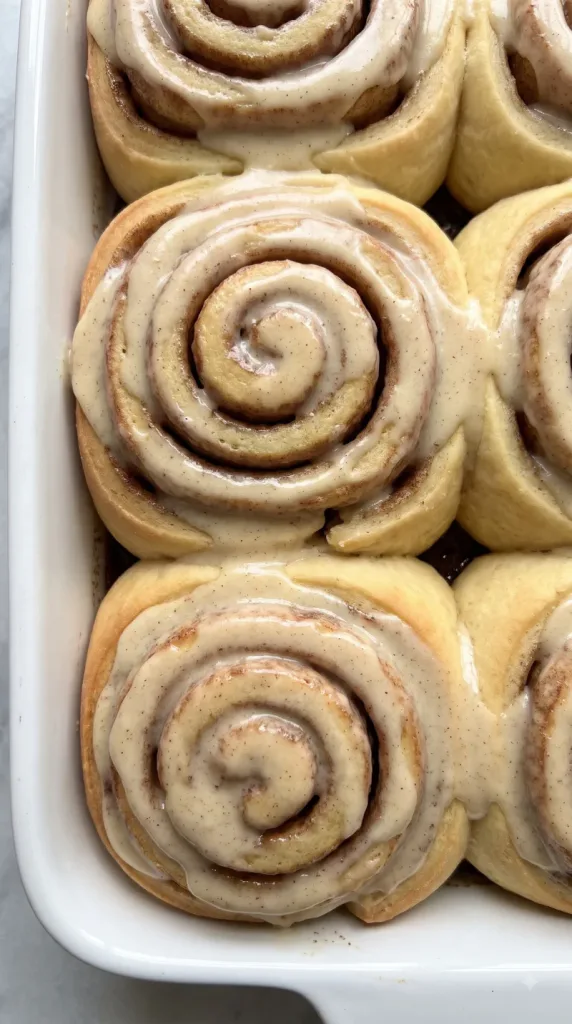
Eggnog Cinnamon Rolls bring soft, buttery spirals and warm holiday spice to the same pan. Eggnog goes into the dough and the cream cheese frosting, so its flavor comes through in every bite. A brown sugar and cinnamon filling gives each roll a rich center. Plan for two rises, then enjoy the rolls while the frosting is still soft.
Why I Love This Recipe
There is something special about pulling apart a soft spiral and finding cinnamon tucked through every layer. Here, nutmeg adds that familiar eggnog flavor without taking over. The dough needs a little patience, but the hands-on work is simple.
- Eggnog in two places: The dough and frosting both carry its creamy flavor.
- Soft centers: An enriched dough makes tender, pull-apart rolls.
- Easy shaping: A single log becomes a pan of generous rolls.
- Make-ahead option: Shape the rolls the night before for a calmer morning.
What You’ll Need
- Servings: 12 rolls
- Prep Time: 35 minutes active
- Rise Time: 1 hour 45 minutes to 2 hours 30 minutes
- Cook Time: 25–30 minutes
- Cooling Time: 15 minutes
- Total Time: About 3 hours to 3 hours 50 minutes, including rises
- Oven Temperature: 350°F (175°C)
- Pan: White 9-by-13-inch rectangular ceramic baking dish with two built-in side handles, greased and unlined
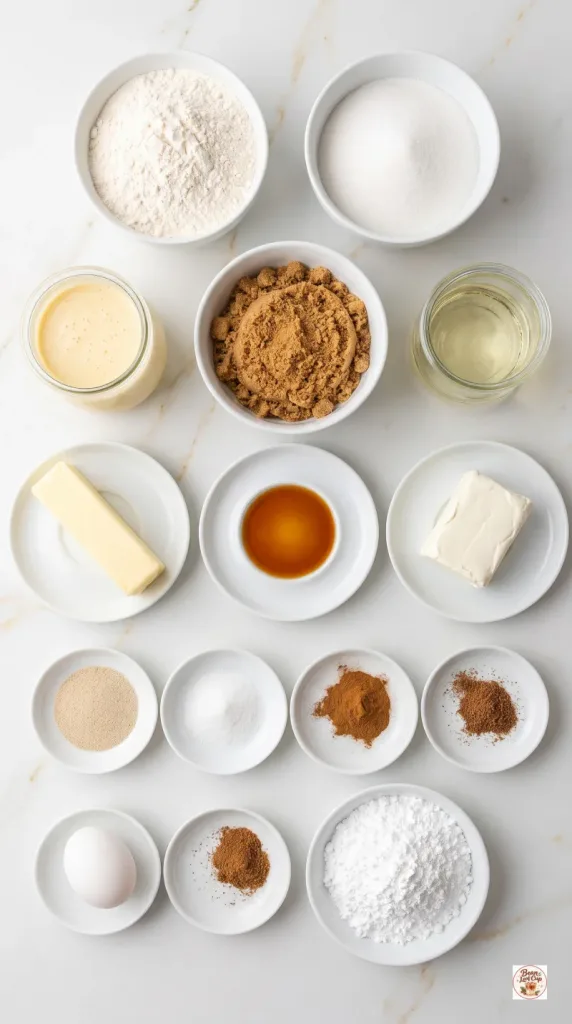
For the dough
- 1 cup (240 ml) pasteurized full-fat eggnog
- 2¼ teaspoons (7 g) active dry yeast
- ¼ cup (50 g) granulated sugar, divided
- 1 large egg, at room temperature
- ¼ cup (57 g) unsalted butter, softened
- 1 teaspoon vanilla extract
- ¾ teaspoon fine salt
- ¼ teaspoon ground nutmeg
- 3½ cups (420 g) all-purpose flour, plus 2 tablespoons for kneading and rolling, divided
- 1 teaspoon neutral oil, for the rising bowl
- 1 teaspoon unsalted butter, softened, for the dish
For the filling
- ¼ cup (57 g) unsalted butter, softened
- ¾ cup (150 g) packed light brown sugar
- 1½ tablespoons ground cinnamon
- ¼ teaspoon ground nutmeg
For the frosting
- 4 ounces (113 g) full-fat brick cream cheese, softened
- 2 tablespoons (28 g) unsalted butter, softened
- 1 cup (120 g) powdered sugar
- 2 tablespoons (30 ml) pasteurized full-fat eggnog
- ½ teaspoon vanilla extract
- ⅛ teaspoon ground nutmeg
Use thick dairy eggnog for the most predictable dough. Spoon flour into the cup and level it, or use a scale. Softened butter should spread easily but should not look oily or melted.
Tools You Need
- Large mixing bowls
- Kitchen scale and measuring spoons
- Dough whisk or sturdy spoon
- Rolling pin and wooden board
- Unflavored dental floss or sharp knife
- White 9-by-13-inch rectangular ceramic baking dish with two built-in side handles
- Hand mixer for the frosting
- Instant-read thermometer
- Spatula and clean covering for the dough
How to Make Eggnog Cinnamon Rolls
Follow the dough’s texture and rise rather than rushing each stage.
Step 1: Mix the Dough
Warm 1 cup pasteurized full-fat eggnog to 100–110°F (38–43°C). Stir in 2¼ teaspoons active dry yeast and 1 tablespoon from the ¼ cup granulated sugar. Let stand for 5–10 minutes, until foamy.
In a large bowl, combine the yeast mixture with the remaining 3 tablespoons granulated sugar, 1 large egg, ¼ cup softened unsalted butter, 1 teaspoon vanilla extract, ¾ teaspoon fine salt, and ¼ teaspoon ground nutmeg.
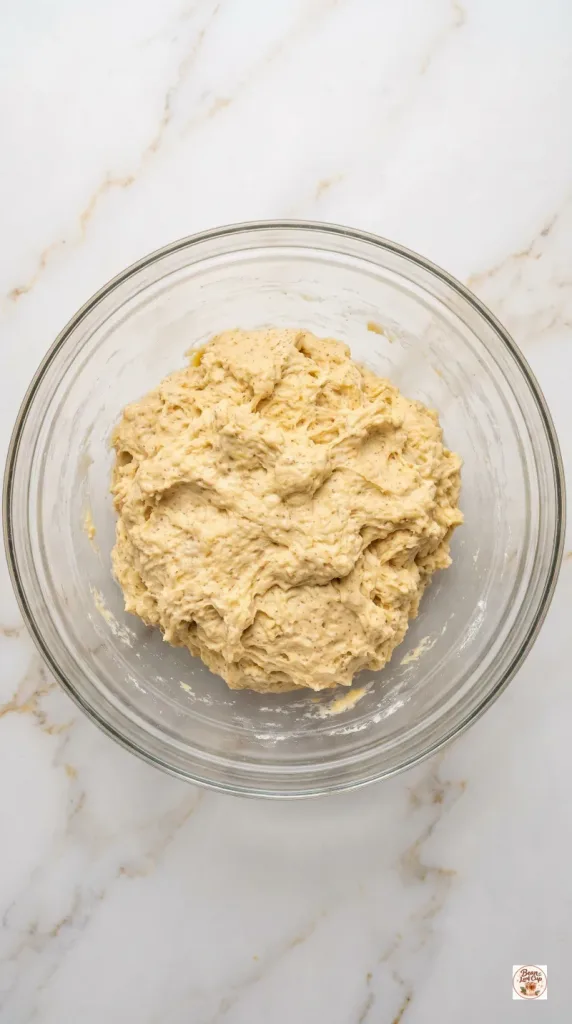
Mix in 3½ cups (420 g) all-purpose flour until a shaggy dough forms. Keep the separate 2 tablespoons flour for kneading and rolling.
Step 2: Knead and Let Rise
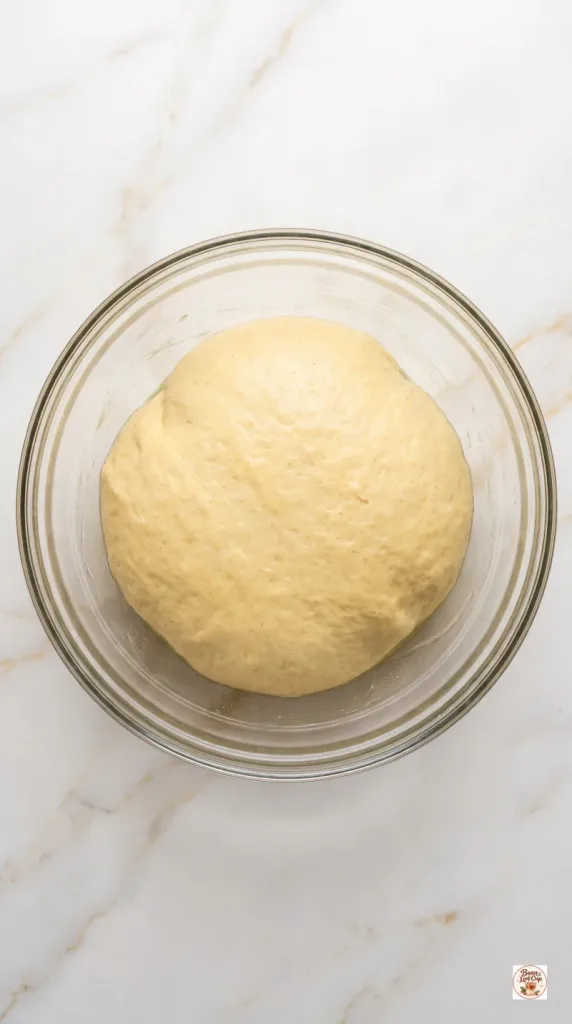
Knead for 8–10 minutes, until smooth, elastic and slightly tacky. Use up to 1 tablespoon of the reserved flour only if it sticks badly; save the other 1 tablespoon for rolling.
Coat a clean bowl with 1 teaspoon neutral oil. Add the dough, turn it once, and cover.
Let rise in a warm spot for 60–90 minutes, until roughly doubled. The dough matters more than the clock.
Step 3: Fill and Roll
Mix ¾ cup packed light brown sugar, 1½ tablespoons ground cinnamon, and ¼ teaspoon ground nutmeg in a small bowl.
Use the remaining 1 tablespoon reserved flour to lightly dust a wooden board. Gently press down the risen dough and roll it into a 12-by-18-inch rectangle.
Spread ¼ cup softened unsalted butter over the dough, leaving a ½-inch border along one long edge. Scatter all the cinnamon-sugar mixture evenly over the butter and press it gently into place.
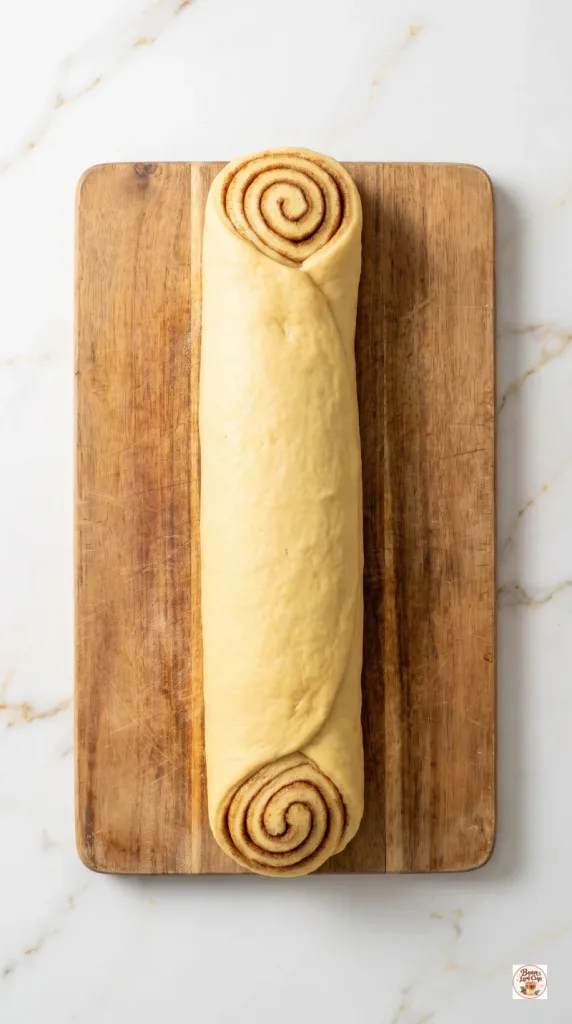
Roll from the opposite long edge into an 18-inch log. Pinch the seam closed and set it seam-side down.
Step 4: Shape and Proof
Grease an unlined white 9-by-13-inch rectangular ceramic baking dish with two built-in side handles with 1 teaspoon softened unsalted butter.
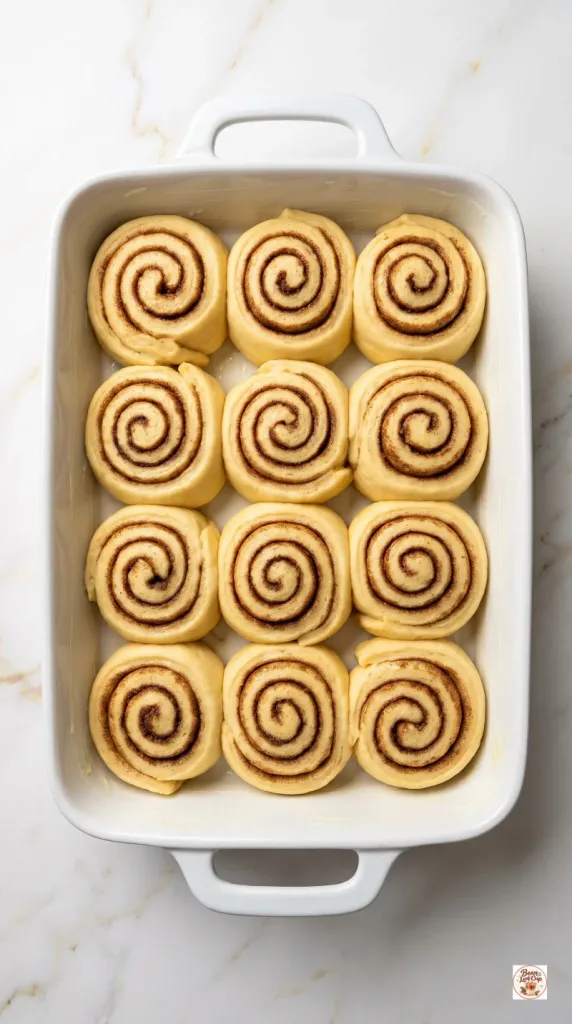
Cut the log into 12 equal rolls, each 1½ inches thick, using unflavored dental floss or a sharp knife. Arrange them cut-side up in 3 rows of 4, with a little room between them.
Cover and let rise for 45–60 minutes, until puffy and nearly touching. Near the end of this rise, preheat the oven to 350°F (175°C).
Step 5: Bake the Rolls
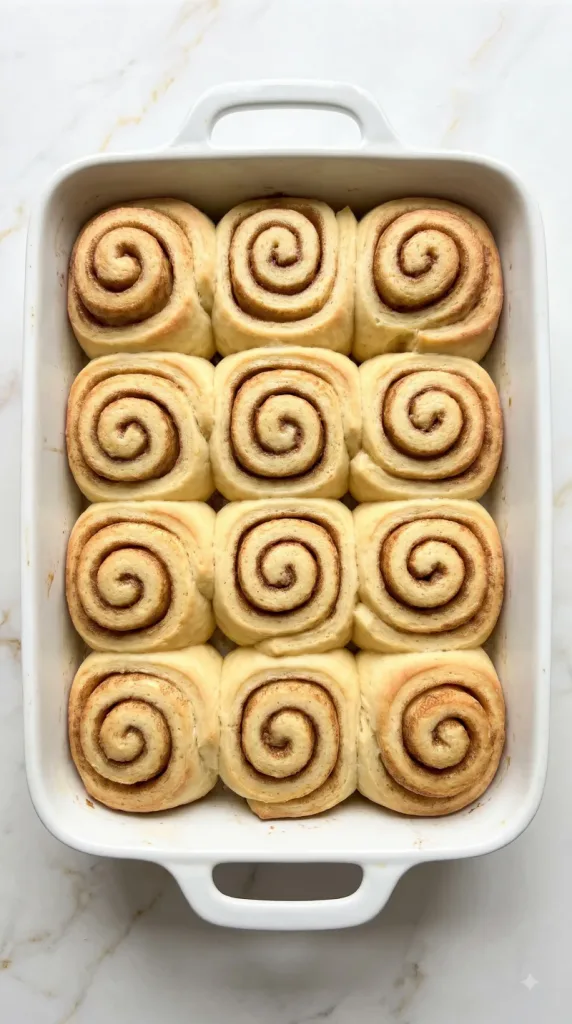
Uncover and bake on the middle rack at 350°F (175°C) for 25–30 minutes, until lightly golden and set in the center. A thermometer inserted into the dough of a center roll should read about 190°F (88°C).
If the tops brown before the centers set, loosely tent with foil for the rest of baking.
Let the dish rest for 15 minutes before frosting so the topping stays creamy rather than melting away.
Step 6: Make the Frosting
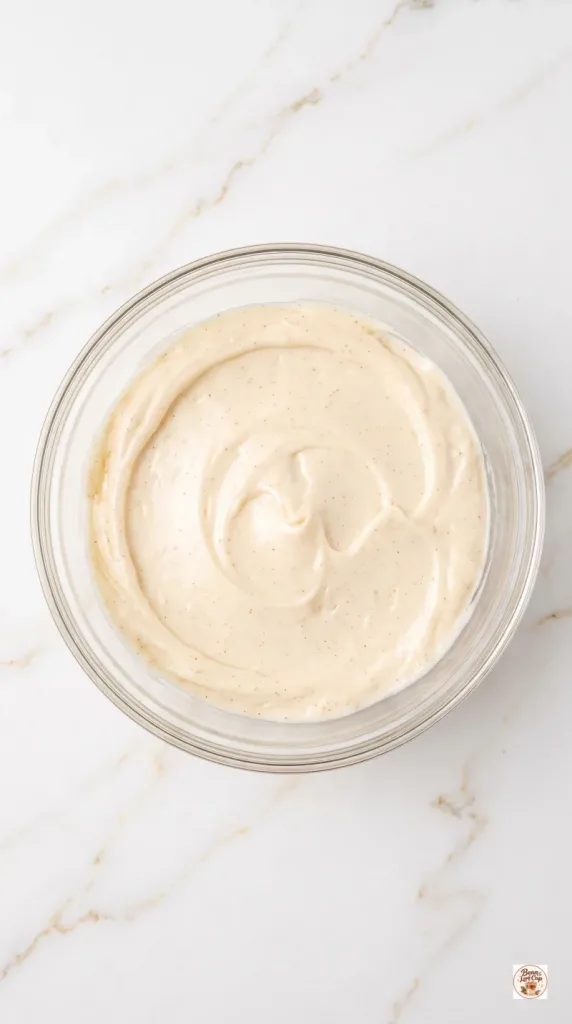
Beat 4 ounces softened full-fat brick cream cheese with 2 tablespoons softened unsalted butter until smooth.
Beat in 1 cup (120 g) powdered sugar, 2 tablespoons pasteurized full-fat eggnog, ½ teaspoon vanilla extract, and ⅛ teaspoon ground nutmeg until creamy. Scrape down the bowl so no lumps remain.
Step 7: Frost and Serve
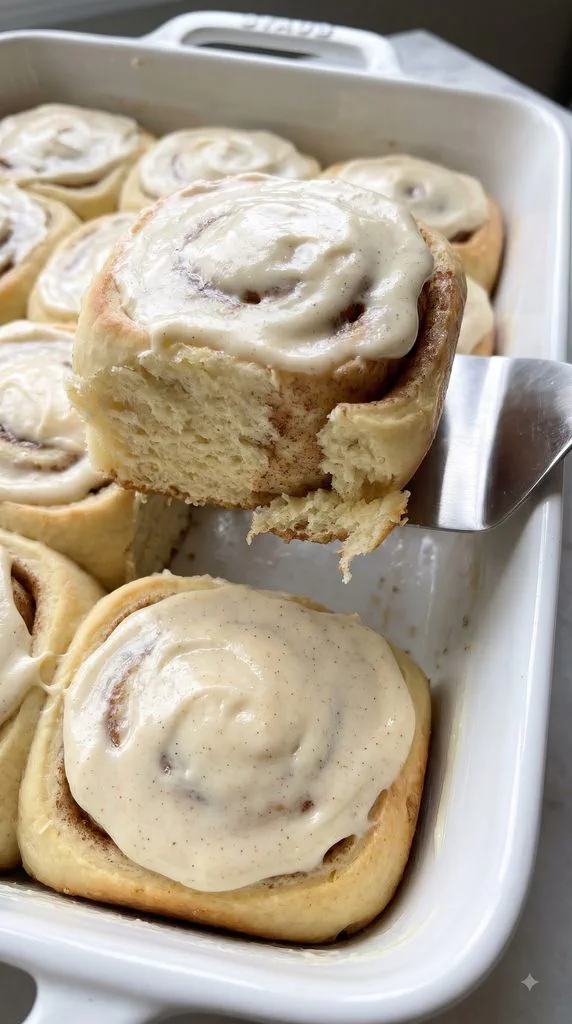
Spread the full batch of eggnog cream cheese frosting over the rolls after their 15-minute rest, letting a little frosting settle between the spirals.
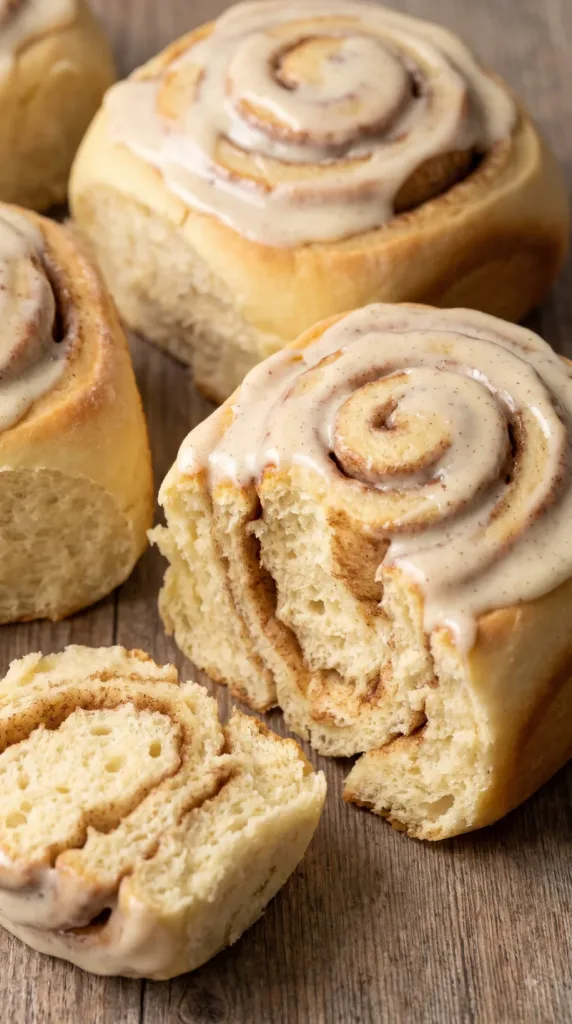
Separate the rolls with a spatula and serve the rolls themselves. For a look at the crumb, gently tear one roll open; the cinnamon filling stays inside its existing dough layers.
Why This Recipe Works (Quick Science)
Kneading builds a stretchy network that traps the gas made by yeast. The first rise gives that network time to expand; the second makes the shaped spirals lighter before baking. Eggnog, butter and egg enrich the dough, making the crumb tender. Too much extra flour can counter that softness, so keep the dough slightly tacky.
Soft butter helps the cinnamon sugar cling to the dough. Resting the baked rolls before frosting keeps the cream cheese topping thick enough to coat the spirals.
Common Mistakes to Avoid
- Overheating the eggnog: Let it cool to the stated temperature before adding yeast.
- Adding flour too quickly: Slightly tacky dough is normal. Heavy flour additions make dense rolls.
- Using melted filling butter: Soft butter stays in place better while rolling.
- Skipping the second rise: The rolls should look puffy before they enter the oven.
- Frosting right away: Give the rolls their cooling time so the topping does not run off.
Make-Ahead Tips
After cutting and placing the rolls in the dish, cover and refrigerate for up to 12 hours instead of completing the second rise. The next day, let them stand covered until puffy, usually 1–2 hours depending on room temperature. Bake as directed. Make the frosting ahead too, keep it covered in the refrigerator, and soften it briefly before spreading.
Leftovers and Storage
Because of the cream cheese frosting, refrigerate covered leftovers within 2 hours. Keep them for up to 4 days. Warm an individual roll gently in the microwave in short bursts until soft; the frosting will loosen as it warms. Freeze individual rolls in airtight wrapping for up to 2 months and thaw in the refrigerator before reheating.
Macros Information
Estimated per roll, based on 12 rolls with all the frosting. Values vary with eggnog brand and how much dusting flour is used.
- Calories: 420
- Protein: 7 g
- Carbohydrates: 65 g
- Fat: 15 g
- Saturated Fat: 9 g
- Fiber: 2 g
- Sugar: 34 g
- Sodium: 210 mg
Frequently Asked Questions (FAQ)
Q: Can I use instant yeast?
A: Yes. Use the same amount and mix it with the flour. Add the warm eggnog and other dough ingredients, then follow the same texture and rise cues.
Q: Do I need alcoholic eggnog?
A: No. This recipe uses regular pasteurized dairy eggnog without added alcohol.
Q: Why is my dough slow to rise?
A: Rich dough can take longer in a cool room. Give it more time in a gently warm spot. If the yeast never foamed at the start, check its freshness and the liquid temperature before continuing.
Q: Can I use low-fat eggnog?
A: It can work, but the dough may feel different and the rolls may be less rich. Add the flour carefully and judge the dough by its soft, slightly tacky feel.
Q: How do I get even rolls?
A: Mark the log into equal sections before cutting. Dental floss helps cut through without flattening the spiral.
Q: How can I tell the centers are done?
A: The center dough should look set rather than wet, and an instant-read thermometer inserted into a center roll should read about 190°F (88°C).
Q: Can I leave off the frosting?
A: Yes. The rolls still have eggnog in the dough, though the frosting adds another layer of that flavor.
Q: Can I freeze them before baking?
A: For the simplest result, freeze the baked rolls instead. Unbaked frozen dough needs extra thawing and proofing time, which can vary a lot.
Final Thoughts
Eggnog Cinnamon Rolls turn a familiar bake into a cozy seasonal treat. Give the dough time to rise, keep the filling tucked into the spirals, and spread on the creamy frosting after a short rest. Leave a comment with how your rolls turned out. Happy cooking!

1 thought on “Eggnog Cinnamon Rolls”
Comments are closed.