
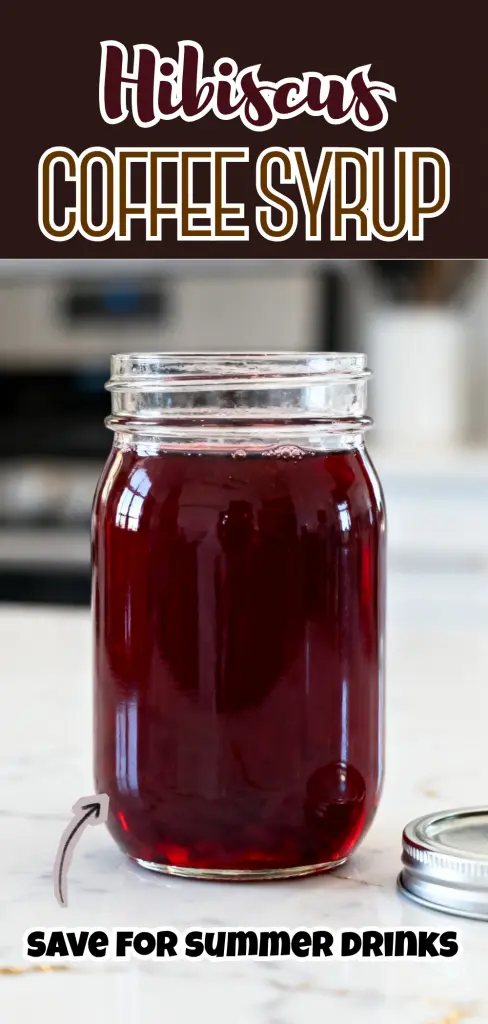
This hibiscus coffee syrup is sweet, tart, floral, and just a little fruity.
It gives iced coffee, cold brew, and creamy lattes a beautiful ruby color and a flavor that feels special without being hard to make.
It takes just a few ingredients and one saucepan.
Once it is chilled, you can keep a bottle in the fridge and add a spoonful whenever your coffee needs something different.
Makes: About 1½ cups, or about 12 servings
Prep Time: 5 minutes
Cook Time: 15 minutes
Cooling Time: 45 minutes
Total Time: About 1 hour 5 minutes
Why I Love This Recipe
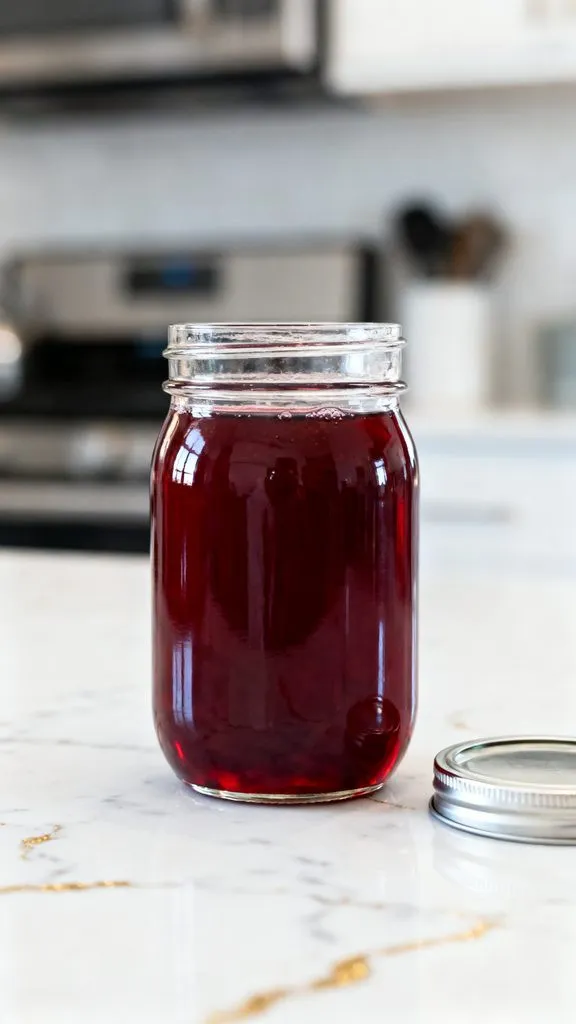
The first thing I love about hibiscus syrup is the color. You start with a handful of dry, almost burgundy hibiscus, and before long the saucepan is filled with this gorgeous ruby-red liquid.
But the flavor is what makes it worth keeping around. Hibiscus is naturally tart and fruity. It reminds me a little of cranberry, so the sugar balances that sharp edge while vanilla softens the floral flavor. That combination works surprisingly well with coffee, especially cold brew and espresso with milk.
I also like that this isn’t a syrup that needs a long list of ingredients.
- It tastes different without being strange. The tart hibiscus gives coffee a bright little twist.
- The color is beautiful. Even a tablespoon can add a rosy-red tone to lighter coffee drinks.
- It works hot or cold. Try it in an iced latte, cold brew, hot latte, or shaken espresso.
- You control the sweetness. One tablespoon gives you a lighter flavor; two tablespoons make the hibiscus much more noticeable.
- One batch lasts for several drinks. Make it once and keep it chilled for coffee throughout the week.
What You’ll Need
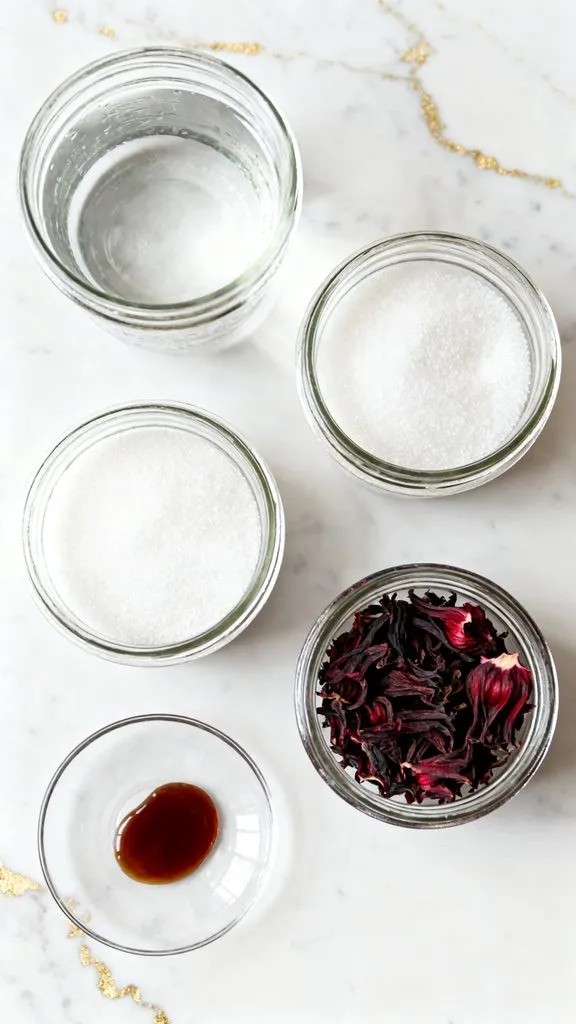
- 2 cups filtered water
- 1 cup granulated cane sugar
- ¾ cup dried hibiscus calyces (Hibiscus sabdariffa)
- 1 teaspoon vanilla extract
Look for dried hibiscus labeled Hibiscus sabdariffa, roselle, sorrel, or flor de jamaica. You want the edible dried calyces used for tea, not ornamental hibiscus flowers.
Hibiscus Coffee Syrup Recipe
Step 1: Combine the Ingredients
Add 2 cups filtered water, 1 cup granulated cane sugar, ¾ cup dried hibiscus calyces, and 1 teaspoon vanilla extract to a medium saucepan.
Stir gently with a wooden spoon so the sugar starts dissolving into the water.
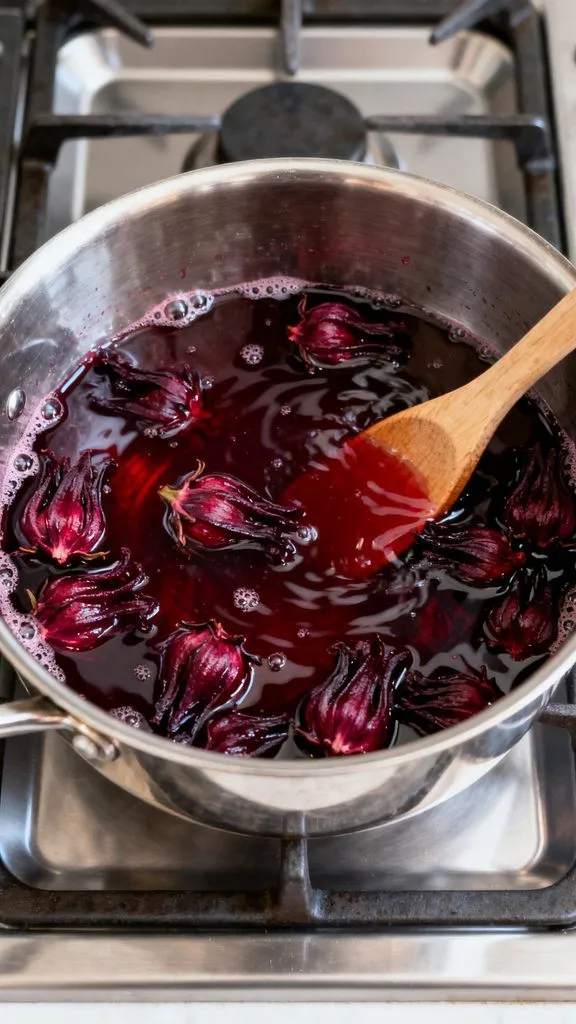
Step 2: Bring It to a Gentle Boil
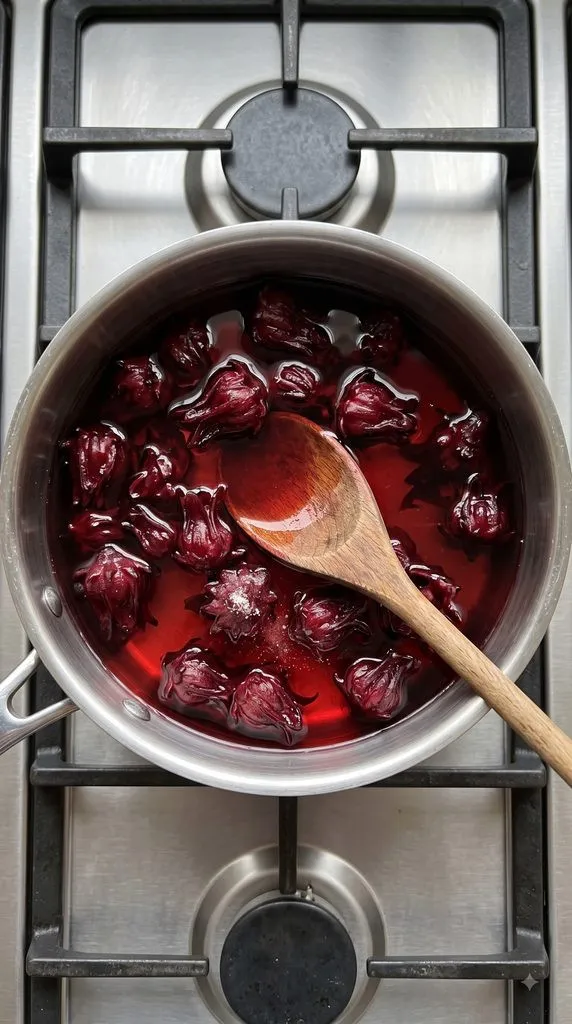
Set the saucepan over medium heat. Cook the 2 cups filtered water, 1 cup granulated cane sugar, ¾ cup dried hibiscus calyces, and 1 teaspoon vanilla extract, stirring every minute or so.
As it heats, the sugar will completely dissolve and the liquid will turn a strong ruby-red color.
Bring it just to a gentle boil.
Step 3: Simmer for 15 Minutes
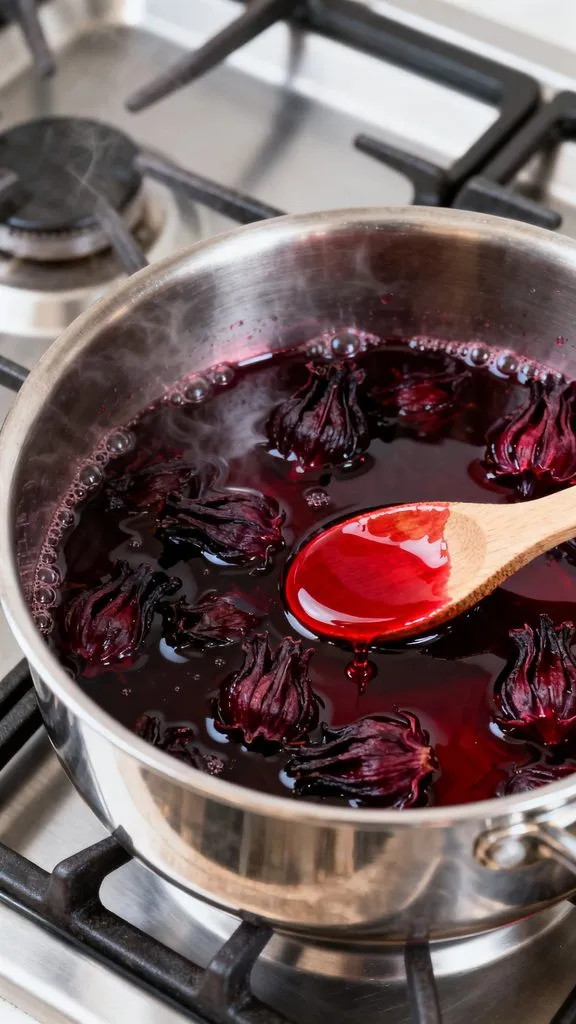
Turn the heat to low. Let the 2 cups filtered water, 1 cup granulated cane sugar, ¾ cup dried hibiscus calyces, and 1 teaspoon vanilla extract simmer gently for 15 minutes.
Stir a few times while it cooks.
The hibiscus will soften and deepen in color. The liquid will reduce slightly and become more syrup-like, but it should still pour easily. Do not cook it until it becomes thick like pancake syrup. It will thicken more as it cools.
Step 4: Cool and Strain
Remove the saucepan from the heat and let the hibiscus mixture cool for about 45 minutes.
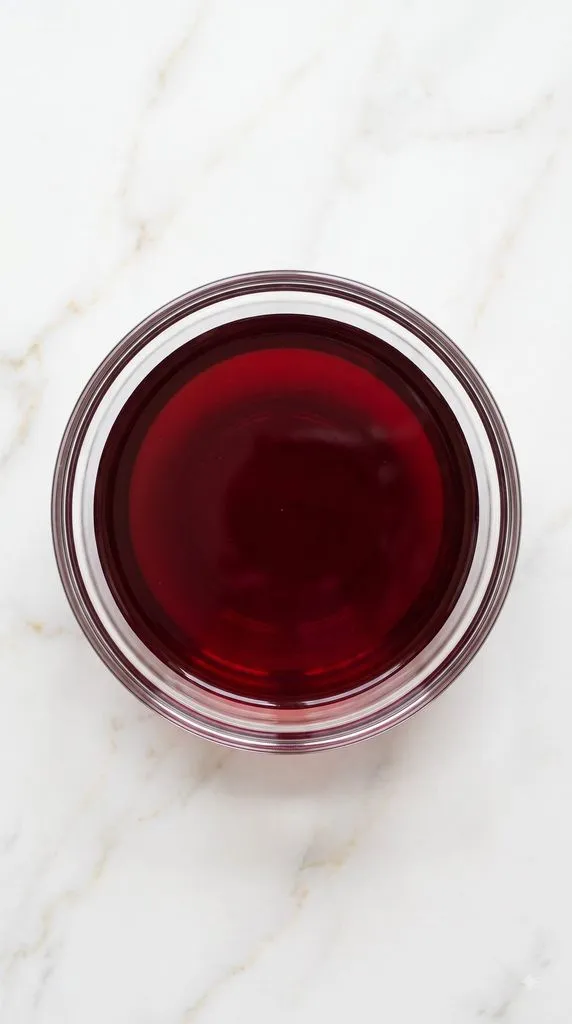
Place a fine-mesh strainer over a large glass measuring cup or bowl. Slowly pour the cooled syrup through it.
Let the liquid drain naturally. You can gently press the softened hibiscus once or twice with the back of a spoon, but do not mash it hard. Discard the strained hibiscus.
You should have roughly 1½ cups of smooth hibiscus coffee syrup.
Step 5: Bottle and Chill
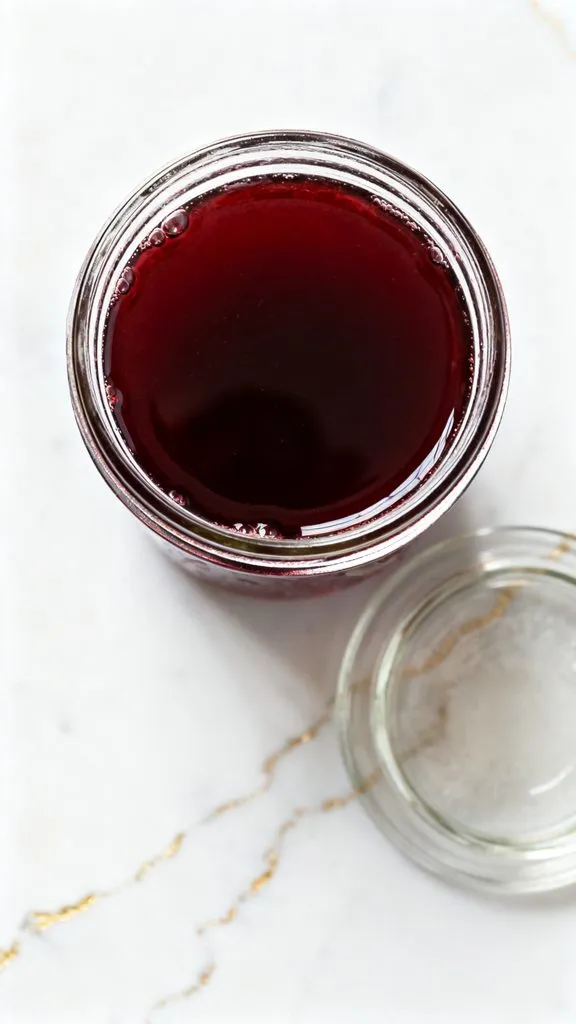
Pour the strained 1½ cups hibiscus coffee syrup through a small funnel into a clean glass bottle or jar.
Close the lid and refrigerate until cold.
Start with 1 tablespoon syrup per 8-ounce coffee. For a sweeter, stronger hibiscus flavor, use 2 tablespoons.
Why This Recipe Works (Quick Science)
Simple syrup works because sugar dissolves much more easily in hot water than when you try to stir dry sugar directly into a cold drink.
Heating the dried hibiscus in the syrup pulls its water-soluble pigments and flavor compounds into the liquid. Those pigments are responsible for that naturally intense red color.
Hibiscus is also naturally acidic and tart. Sugar balances that acidity instead of completely hiding it. That sweet-tart contrast is important because coffee already has bitter and roasted flavors.
The small amount of vanilla rounds everything out. It connects the fruity hibiscus flavor with the deeper roasted flavor of coffee, especially when milk or cream is involved.
Finally, the 15-minute simmer reduces some of the water. That gives you a concentrated syrup without cooking it so far that it becomes sticky or candy-like.
Tools You’ll Need
- Medium stainless steel saucepan
- Wooden spoon
- Measuring cups
- Measuring spoons
- Fine-mesh strainer
- Large glass measuring cup or bowl
- Small funnel
- Clean glass bottle or jar with a tight lid
Pro Tips
- Use the right hibiscus. Buy food-grade dried Hibiscus sabdariffa, which may also be sold as roselle, sorrel, or flor de jamaica.
- Keep the simmer gentle. A hard boil evaporates too much water and can make the syrup thicker than you want.
- Remember that it thickens as it cools. The hot syrup should still look fairly thin when you remove it from the stove.
- Strain slowly. Hibiscus can stain light surfaces and clothing, so pouring carefully saves a lot of cleanup.
- Start small in coffee. Try 1 tablespoon first. Hibiscus has plenty of personality, and you can always add more.
Substitutions and Variations
White sugar: Regular granulated white sugar can replace cane sugar in the same amount.
Honey: Replace the 1 cup sugar with 1 cup honey. The syrup will have a stronger floral taste.
Agave: Try about ¾ cup agave in place of the 1 cup sugar since agave tastes sweeter.
Cinnamon: Add 1 small cinnamon stick while simmering for a warm flavor that works especially well with hot coffee.
Orange: Add 2 strips of orange zest during the simmer. Strain them out with the hibiscus.
Extra vanilla: Increase the vanilla to 2 teaspoons if you’re mainly making vanilla-style iced lattes.
Make-Ahead Tips
This is a great make-ahead recipe because the syrup needs time to cool anyway.
Make it the night before you want to use it. Strain and bottle the syrup, then refrigerate it overnight. By morning, it will be completely cold and ready for iced coffee.
You can also divide the syrup between smaller jars if you don’t expect to use the whole batch quickly.
Common Mistakes
Using decorative hibiscus: Not every ornamental hibiscus flower is intended for cooking. Buy food-grade dried Hibiscus sabdariffa.
Boiling too hard: A rolling boil can reduce the syrup too quickly. Once it reaches a boil, turn the heat down.
Waiting for it to look thick: Hot simple syrup is fairly runny. If you cook it until it looks very thick in the saucepan, it can become much too thick after cooling.
Crushing the flowers while straining: Pressing very hard can push fine plant material through the strainer. A gentle press is enough.
Adding too much to your first coffee: Hibiscus is tart. Begin with 1 tablespoon and taste before adding another.
What to Serve With Hibiscus Coffee Syrup
This syrup is made for coffee drinks, but you don’t have to stop there.
Try 1–2 tablespoons in an iced latte, especially with whole milk or oat milk. Add it to cold brew for a sweet-tart contrast or stir it into a hot vanilla latte.
It is also good in sparkling water, lemonade, iced tea, or a simple glass of cold water and ice.
For breakfast, try a small drizzle over vanilla yogurt, pancakes, waffles, or fresh berries.
Leftovers and Storage
Pour the cooled syrup into a clean glass jar or bottle with a tight-fitting lid and keep it refrigerated.
For best quality, use it within 2–3 weeks. If the syrup develops mold, an unusual smell, unexpected bubbling, or obvious cloudiness that wasn’t there before, discard it.
You can also freeze the syrup. Pour it into an ice cube tray, freeze until solid, and transfer the cubes to a freezer-safe container. Freeze for up to 3 months.
A frozen hibiscus syrup cube is especially handy for iced coffee because it adds flavor as it melts.
Macros Information
Approximate nutrition for 1 serving (about 2 tablespoons), based mainly on the sugar in the recipe:
- Calories: 65
- Carbohydrates: 17 g
- Sugar: 17 g
- Protein: 0 g
- Fat: 0 g
- Fiber: 0 g
Nutrition will vary depending on how much the syrup reduces and the exact ingredients you use.
FAQ
Does hibiscus syrup taste good in coffee?
It can, especially if you enjoy fruity coffee drinks. Hibiscus adds a tart, berry-like flavor that contrasts with roasted coffee. Milk and vanilla help bring the two flavors together.
How much hibiscus syrup should I put in coffee?
Start with 1 tablespoon for an 8-ounce drink. Use up to 2 tablespoons for a sweeter and stronger hibiscus flavor.
Is this syrup actually made with coffee?
No. This is a hibiscus syrup designed to flavor coffee, rather than a coffee-flavored syrup. That keeps the syrup useful for lattes, cold brew, tea, lemonade, and other drinks.
What kind of coffee works best?
Cold brew, iced espresso, and milk-based lattes are especially good choices. A smooth medium or dark roast gives the bright hibiscus flavor something rich to balance against.
Can I use fresh hibiscus?
Dried food-grade Hibiscus sabdariffa gives you a more predictable concentration and is what this recipe is designed around. Fresh roselle would require adjusting the quantity and possibly the water.
Why isn’t my syrup very thick?
That’s normal. This should be a pourable drink syrup, not a thick pancake syrup. It will also become a little thicker after chilling.
Can I make it less sweet?
You can reduce the sugar, but sugar contributes to both the flavor and body of simple syrup. A lower-sugar version will taste more tart and won’t have quite the same syrupy texture.
Final Thoughts
Hibiscus coffee syrup is one of those little homemade extras that can completely change an everyday cup of coffee. The deep ruby color is beautiful, but that sweet, tart, slightly floral flavor is what makes it interesting.
Make a batch, chill it well, and start with a spoonful in your next iced latte or cold brew. Once you find the amount that works for your coffee, it is incredibly easy to customize every glass.
If you make this hibiscus coffee syrup, leave a comment and share how you used it. I’d love to hear whether you tried it in iced coffee, a latte, cold brew, or something completely different.